The meeting is twenty minutes old and mostly about something else when the product manager says it, almost as an afterthought:
"Can we add an option to pause a subscription? Customers keep asking for it instead of canceling."
Someone nods. Someone else is already half-drafting the ticket in their head. A frontend engineer glances at the sign-up flow mockups still on the screen and shrugs.
"The UI part is tiny," he says. "One button on the account page. Maybe a confirmation modal. I could have it done by Thursday."
Nobody objects. It sounds right. A pause button is not a redesign. It is not a new product. It is not even a new page. It is, visually, one interactive element sitting next to "Cancel subscription," doing something slightly less final.
The ticket gets written. The estimate gets written next to it: three days, generously rounded to a week for testing.
Six weeks later, the feature ships. Along the way, it touched the billing engine, the entitlement system, three notification templates, the CRM sync job, two dashboards used by finance, the mobile app's cached account state, a Stripe webhook handler nobody had looked at in over a year, and a support runbook that had to be rewritten because "canceled" no longer meant what everyone assumed it meant.
Nobody lied in that first meeting. The button really was small. It's just that the button was never the feature.
This article is about the gap between those two sentences — "the button is small" and "the feature is small" — and why that gap is where so much of the real cost, risk, and delay in software development quietly lives. It is not a story about bad estimation or slow engineers. It is a story about how change moves through a system once it leaves the screen, and why the people asking "how long will this take" are almost always asking the wrong first question.
The right first question is not how big does this look. It's how far does this travel.
Why We See the Button and Miss the System
There is a reasonable explanation for why a pause button looks small, and it has nothing to do with anyone's competence. It has to do with what different people are actually looking at when they estimate a feature.
A founder looks at a mockup and sees one button.
A designer looks at a screen and sees one new component, maybe two new states — default and pressed.
A frontend engineer looks at the interaction and sees one click handler, one API call, one loading spinner.
Every one of these views is accurate. None of them is the system.
The system does not see a button. The system sees a new possible condition that did not exist yesterday: an account that is neither active nor canceled. That single new condition has to be represented somewhere — in a database column, in an enum, in a conditional statement — and the moment it exists, every piece of code that ever asked "is this account active?" now has a wrong answer sitting in front of it, waiting to be reached.
This is the core distinction the rest of this article is built on, so it's worth naming precisely:
Visible surface area is what a person can see and click. It is measured in screens, components, and interactions.
Dependency surface area is what the system has to reconcile. It is measured in the number of other components, rules, records, and processes that make an assumption about the thing you just changed.
These two quantities are often only weakly correlated, and the direction of the mismatch can run either way.
Changing a button's color from blue to green is a large visible change — everyone will notice — but it usually has close to zero dependency surface area. Nothing downstream cares what color the button is. The change is real, but it is contained entirely within the rendering layer.
Adding a "Pause subscription" option is the opposite. Visually, it is almost nothing — one new label, one new state in a dropdown. But it introduces a new value into a field that billing logic, access control, reporting, and three external systems all silently assumed had a small, fixed set of possibilities. The visible footprint is tiny. The dependency footprint is not.
Adding a new user role is often close to invisible in the UI — maybe a new option in a dropdown on an admin screen — while being one of the largest possible changes to a system's authorization surface, because every permission check in the codebase now has to account for a value it was never written to expect.
Changing a single tax calculation rule might add no interface at all. A number simply gets computed differently. But that number flows into invoices, into revenue recognition, into historical reports, and potentially into legal filings, and getting it wrong is not a UI bug — it is a financial one.
None of these examples are exotic. They are the ordinary, weekly texture of running a software product. The reason they keep surprising teams is that estimation habits are built around the visible surface, because the visible surface is what gets mocked up, discussed, and approved. The dependency surface is invisible until someone starts tracing it — which is exactly what the rest of this article does, one change at a time.
Following One Change Through the Stack
To make the abstraction concrete, it helps to walk through a single change slowly, the way an engineer actually encounters it — not as a list of affected systems handed down in advance, but as a sequence of questions that keep opening onto more questions. Let's go back to the pause button.
The Frontend Is Never Just the Frontend
The first honest version of "add a pause button" is not one component. It's a small decision tree.
Who is allowed to see the button in the first place? Not every account should have this option. Someone on a free trial has nothing to pause — there's no active billing cycle to interrupt. Someone whose last payment failed and who is already in a past-due state presents an ambiguous case: pausing them might be exactly what they want, or it might let them dodge a payment they still owe. A team account raises a different question entirely — should any member see this button, or only the person designated as the billing owner? Get this wrong and a non-billing team member could pause access for an entire company without anyone else's knowledge.
What does the button do while the request is in flight? This sounds trivial until you consider that a pause action, unlike a UI toggle, is not instantaneous. It may need to check current billing state, calculate a resume date, and write to more than one system before it can honestly report success. The loading state has to account for a request that could legitimately take a second or two, and the UI has to decide what "success" even means: is the account paused as soon as the API responds, or only once a downstream billing update confirms it?
What happens on failure? Not every failure is the same failure. The payment provider could be unreachable. The account could have changed state in the seconds since the page loaded — someone on another tab might have already canceled it. The server might process the pause correctly but time out before the response reaches the browser, leaving the frontend showing an error for an action that actually succeeded.
Does the button need a confirmation step, and what does that confirmation need to say? Pausing is not symmetric with canceling. A customer needs to know, before they click, when billing will resume, whether they lose access immediately or retain it until the end of the paid period, and whether pausing forfeits any active discount.
None of this is exotic frontend work. It is normal, careful engineering. But notice what has already happened: the "tiny UI piece" has expanded into a set of business rules about trials, payment states, team ownership, and discount eligibility — before a single line of backend code has been discussed.
The API Layer Introduces Its Own Physics
Once the frontend has something to send, it needs somewhere to send it, and that introduces a second layer of decisions that have nothing to do with the visual design at all.
The most important one is idempotency, and it deserves to be introduced honestly rather than as a checkbox item, because it is one of the most common sources of production incidents in exactly this kind of feature.
Consider what happens if a customer, uncertain whether their click registered, clicks the pause button twice in quick succession. Or consider a mobile network that drops a connection after the server has already processed the request but before the confirmation reaches the device — a scenario common enough that most HTTP client libraries retry automatically. In both cases, the same "pause this subscription" request may arrive at the server more than once.
If the pause endpoint is written naively — check current state, then write new state — a duplicate request can cause real problems. It might extend a pause period incorrectly, trigger two separate notification emails, or write two rows into a billing history table that a report elsewhere assumes is one row per pause event. The fix is not exotic: the request needs an idempotency key, or the operation itself needs to be written so that pausing an already-paused subscription is a safe no-op rather than a new event. But this decision has to be made deliberately. It does not happen by accident, and skipping it does not usually cause a bug on day one — it causes a bug three months later, during a period of mobile network congestion, that nobody can immediately explain.
Authorization at the API layer also has to be re-derived independently of the frontend. The button being hidden from unauthorized users is a UI convenience, not a security boundary — the backend has to check billing ownership and account state itself, because any API endpoint that a browser can call is also an endpoint that a scripted request can call directly, bypassing whatever the interface chose to show or hide.
And there's a subtler question sitting underneath all of it: backward compatibility. If this account already has an active mobile app or a third-party integration calling the existing subscription API, does adding a "paused" state change what those older clients see when they check subscription status? If a mobile app checks a boolean is_active field, does a paused subscription report false — visually correct, but now indistinguishable from cancellation to any client that doesn't yet know about the new state?
That last question is the seed of a much larger one, which comes next.
Domain Logic: The Difference Between a Flag and a Meaning
Here is where the feature stops being an engineering task and starts being a business decision disguised as one.
It is technically trivial to add a boolean column called is_paused to a subscriptions table. It takes minutes. But is_paused = true is not the feature. It is a label. The feature is everything that label is supposed to mean, and that meaning has to be decided explicitly for every adjacent concept the subscription touches:
Does a paused account retain access to the product, or lose it immediately? If it retains access, for how long — until the end of the current billing period, or indefinitely?
Does the renewal date move? If a customer pauses for two weeks, does their next billing date simply shift by two weeks, or does the original date stay fixed and the customer effectively gets two weeks free?
What happens to any scheduled or in-flight background job tied to this subscription — a job that renews it, that sends a "your trial is ending" email, that recalculates usage limits at the start of a new cycle? Does that job need to check pause state before running, and what does it do if a subscription is paused mid-execution?
What happens to a promotional discount tied to the first three months of a plan? Does the pause period count against that window, or pause it too?
What about an annual contract, where the customer has already paid for twelve months up front? Pausing doesn't defer a charge that hasn't happened yet — it has to somehow account for time already paid for, which starts to look less like a subscription toggle and more like a mini accounting problem.
What happens to unused credits, seats, or add-ons attached to the account during the pause?
None of these questions have a single obviously correct answer. That is precisely the point. "Pause" is not a Boolean. It is a new product state, and introducing a new state does something specific and often underestimated: it multiplies the number of transitions the system now has to define, defend, and test.
Before this feature, the subscription lifecycle probably looked something like:
Trial → Active → Canceled
Active → Past Due → Active (payment recovered)
Active → Past Due → Canceled (payment never recovered)
A small, closed set of states, and a small, well-understood set of transitions between them. Once "Paused" is added, the honest version of that diagram grows:
Trial     → Active
Active    → Paused
Paused    → Active
Paused    → Canceled
Past Due  → Paused   ?
Canceled  → Paused   ?
Paused    → Past Due ?
Every one of those question marks is a decision someone has to make on purpose — not by accident, not by whatever the code happens to do when it encounters a combination nobody designed for. Should a past-due account be allowed to pause, effectively letting a customer dodge an overdue payment by hiding behind a new feature? Should a canceled account be reactivated into a paused state, or does cancellation have to go through active first? Each unaddressed question mark is a latent edge case, and edge cases in billing systems tend to surface not in testing, but in a support ticket three weeks after launch, usually from a customer who found the one sequence of actions nobody thought to define.
This is the first real discovery of the article, and it is worth stating plainly: the visible feature was a button. The actual feature was a new state in the product's lifecycle, with an expanded set of transitions that now has to be deliberately designed rather than assumed.
The Change Propagation Graph
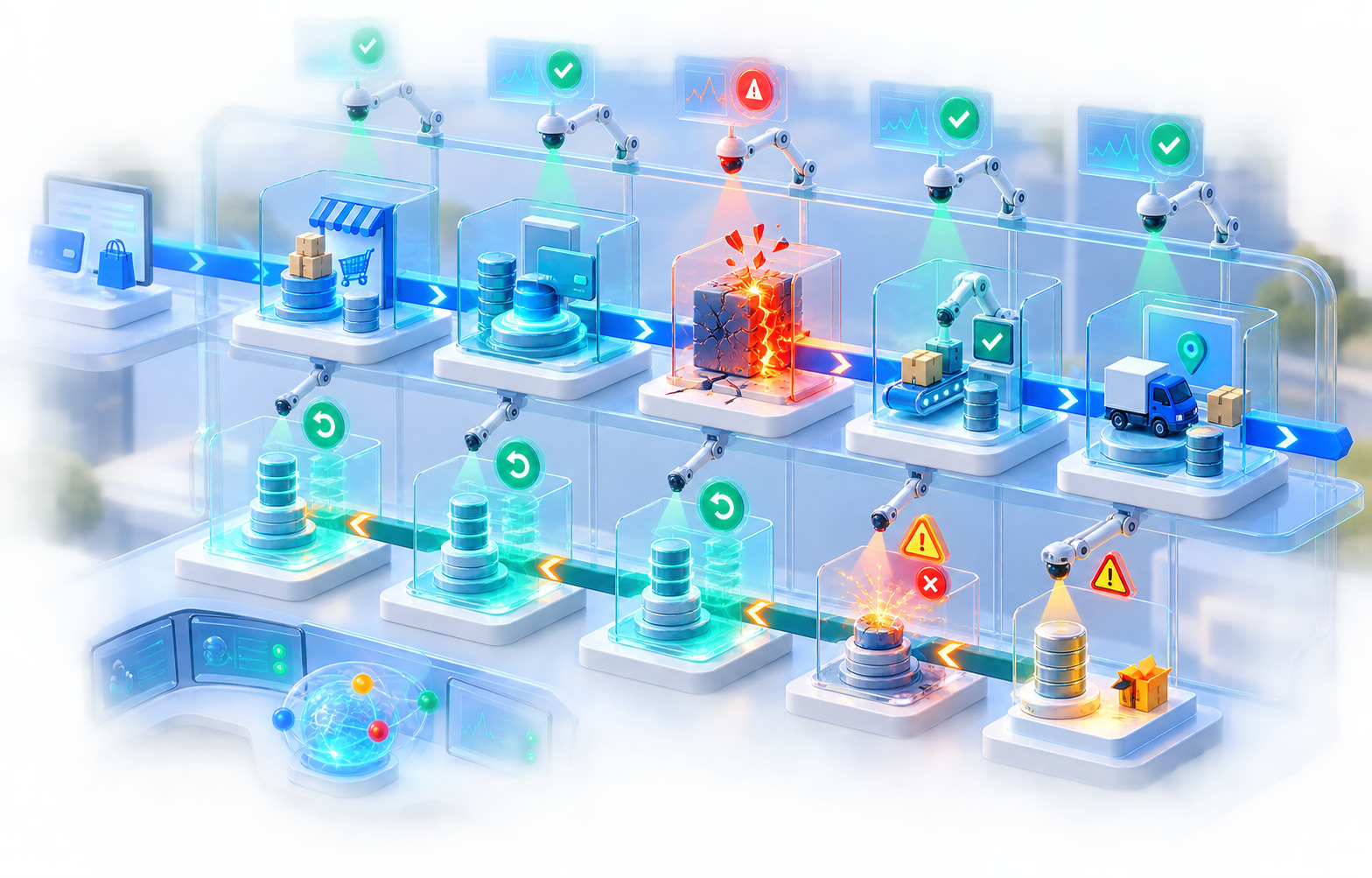
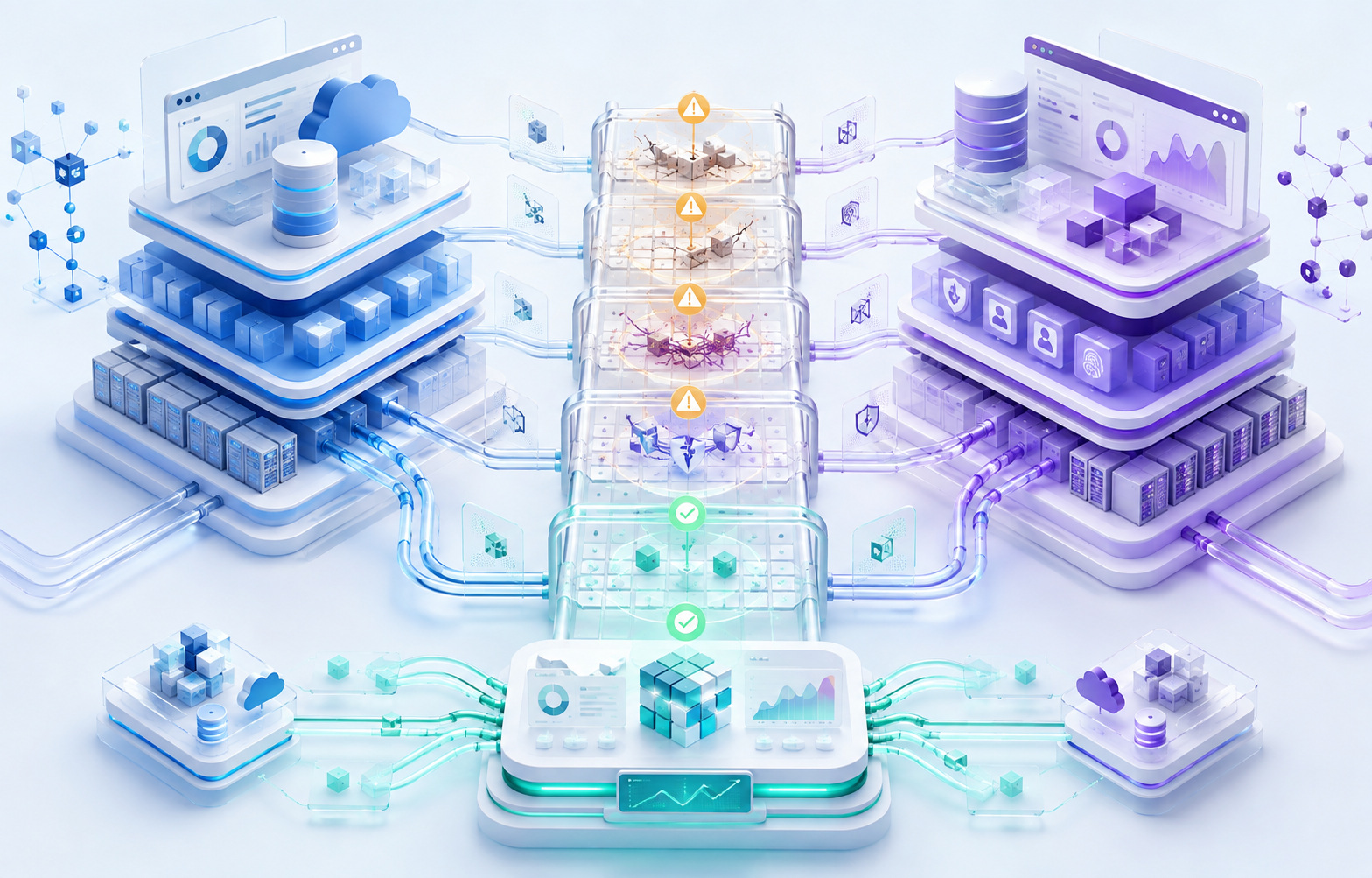
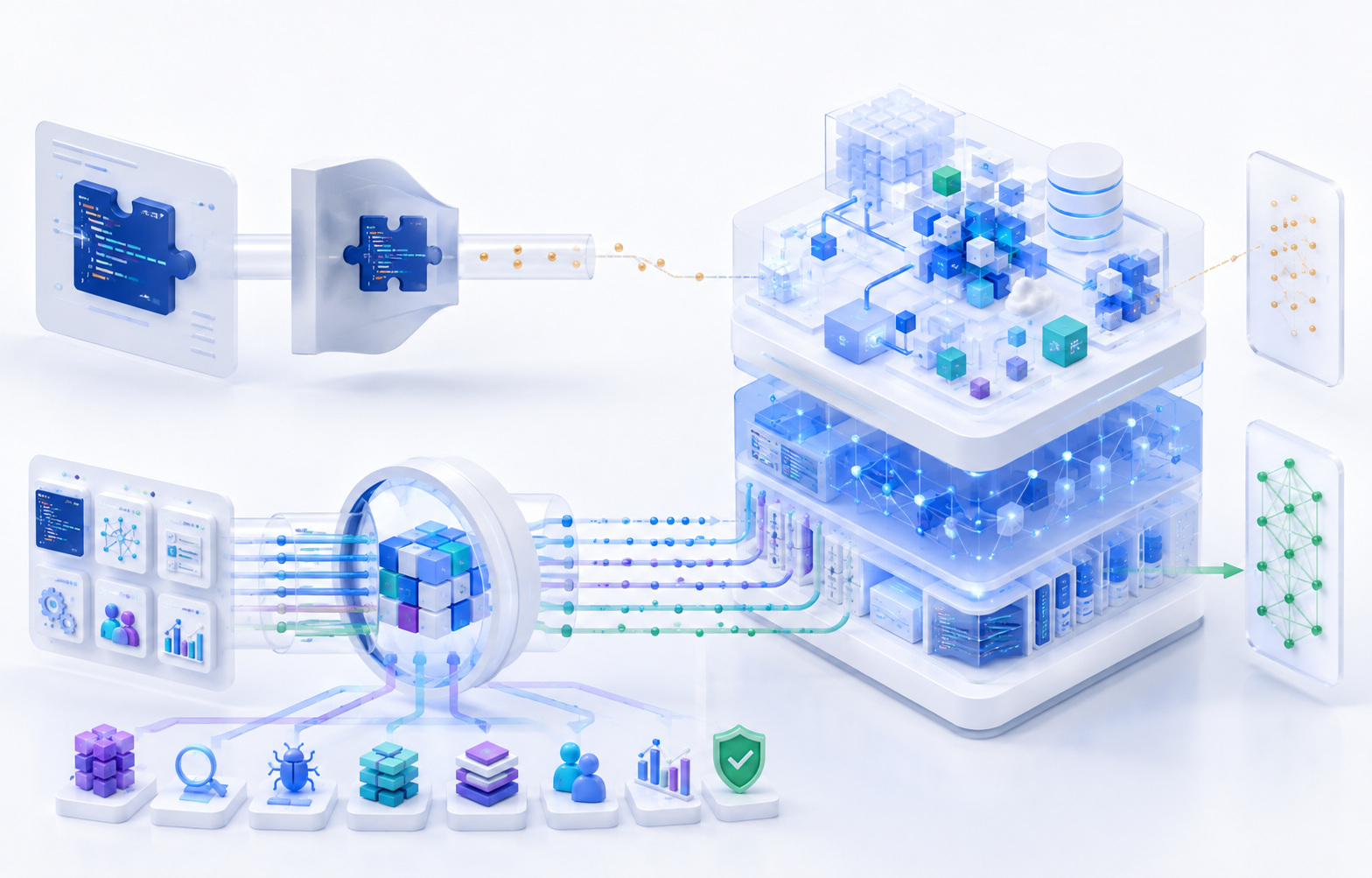
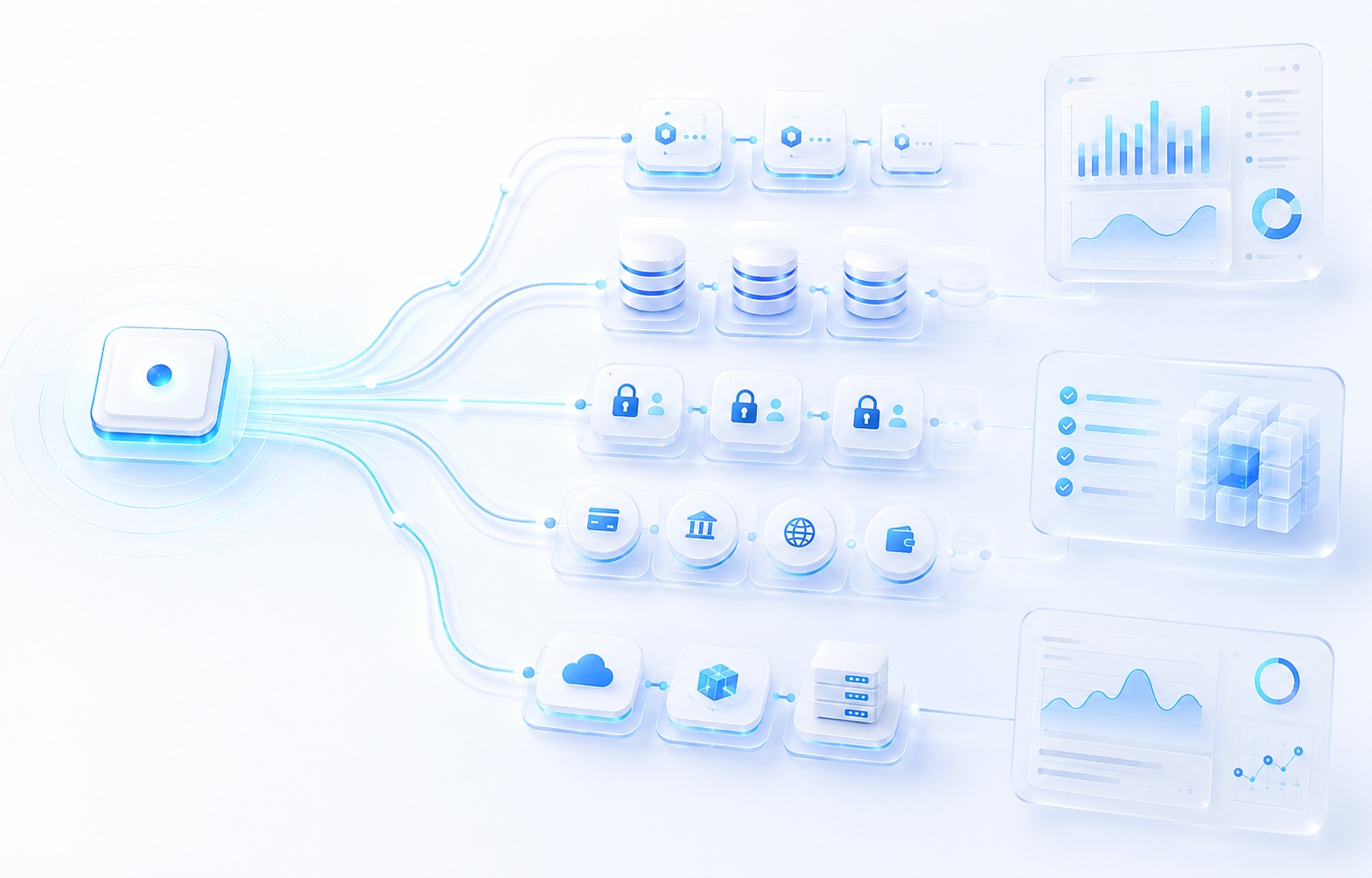
Once a change stops being "add a button" and becomes "introduce a new state," it stops behaving like a local edit and starts behaving like something that radiates outward. The most useful way to reason about that radiation is not a flat list of "things that might be affected" — lists like that are easy to write and easy to forget. It helps to think in layers, because each layer answers a different question and requires a different kind of person to evaluate it.
Call this the Change Propagation Graph. It is not a formal industry model — it's a way of organizing the same investigation engineers already do informally, made explicit enough to use in a planning conversation.
Layer 1 — Directly Changed Components. This is the code someone intentionally opens and edits: the pause button itself, the new API endpoint, the subscription service that now understands a paused state. This layer is what shows up in the pull request diff, and it is almost always the smallest layer.
Layer 2 — Components That Depend on Them. This is anything inside the same system that reads the state Layer 1 just changed, without necessarily being asked to. The authorization system, which decides what a paused account is allowed to access. The billing scheduler, which decides whether to attempt a charge on the renewal date. The entitlement system, which decides how many seats or how much usage the account is allowed. None of these were touched directly, but all of them now have to answer a question they've never had to answer before: what do we do when the account is paused?
Layer 3 — Business Processes Triggered by the Change. This layer is about behavior over time, not state at a single moment. Invoice generation has to decide what a paused period looks like on a bill. The renewal process has to decide whether to run at all for a paused account. Notification workflows — "your renewal is coming up," "your card is about to expire" — have to decide whether they still fire, or whether firing them for a paused account is confusing or actively wrong.
Layer 4 — External Systems Receiving the Data. This is the first layer that leaves the company's own codebase. The payment gateway needs to be told something, whether that means pausing a subscription object on its side or simply not attempting the next charge. The CRM, if account status is synced to it, now needs a new value it may not have a field for. The analytics platform needs to distinguish a paused user from an active one, or every engagement metric involving that account becomes ambiguous. The accounting platform, if invoices or revenue figures sync automatically, needs to represent a period of non-billing correctly, or revenue reporting will be wrong in a way that's hard to detect just by looking at the dashboard.
Layer 5 — Historical Data and Reporting. This layer asks a question that's easy to skip: does this change reach backward in time? Monthly recurring revenue dashboards, churn calculations, and cohort retention analysis all depend on a small, stable set of subscription states. The moment "paused" exists, someone has to decide whether a pause counts as churn, as retention, or as its own category — and whoever built the existing dashboards almost certainly didn't anticipate a third option.
Layer 6 — Operational and Human Processes. This is the layer engineers most often forget to ask about, because it isn't code at all. Support needs a script for "how do I explain a paused account to a customer." Customer success needs to know whether a spike in pauses should be treated as a churn risk signal or ignored. Finance needs to know how paused accounts affect reconciliation at month's end. None of this shows up in a pull request, but all of it breaks if it isn't accounted for.
The point of laying the graph out explicitly is not that every feature needs to march through all six layers with equal weight. Most don't. The point is that the cost of a change does not stop at the edge of the codebase, and a team that only ever evaluates Layer 1 and Layer 2 will consistently be surprised by problems that were entirely predictable — just not from where they were looking.
First, Second, and Third-Order Effects
There's a related but distinct idea worth separating out, because it explains why bugs from these changes tend to show up somewhere unexpected rather than in the code that was actually modified.
A first-order change is the code someone deliberately wrote or edited. A second-order effect is something that behaves differently as a consequence of that first-order change, without anyone having touched it directly. A third-order effect is a system or process that depended on the second-order behavior, and now inherits a problem nobody planned to create.
This sounds abstract until it's traced through a few different examples, because the same three-step pattern shows up in completely unrelated features.
A new signup field. Suppose a company decides to add a "company size" dropdown to the signup form, because sales wants better lead qualification. First order: a new field on the frontend form, a new column in the database. Second order: whatever CRM integration syncs new signups now receives a payload with a field it didn't have before — and depending on how that sync was built, it might silently drop the field, error out entirely, or map it to the wrong CRM property. Third order: the sales automation platform, which triggers different email sequences based on CRM fields, was configured against the old field structure. Leads that should be routed to an enterprise sales sequence quietly fall through to a generic one, and nobody notices for weeks, because nothing "broke" in the sense of throwing an error. It just started routing incorrectly.
A new user role. Suppose a product adds a "Read-only Analyst" role, sitting between "Member" and "Admin." First order: new authorization rules defining what that role can and can't do. Second order: existing screens, which were built with only two or three roles in mind, start exposing data to the new role that nobody explicitly decided it should see — because permission checks were often written as "if not admin, hide this," which silently grants access to any new role that isn't admin, rather than "if role is in this explicit allow-list." Third order: export tools, API endpoints, and audit logs — built even earlier, by different people, with even less awareness of the new role — may leak information the product team never intended a read-only analyst to have, or conversely, may incorrectly block them from something they were explicitly promised.
A new payment method. Suppose checkout adds support for a regional payment method common in a new market the company is expanding into. First order: a new option in the checkout flow, a new integration with a payment processor. Second order: refunds now behave differently, because that payment method's refund timeline and mechanics don't match the credit card flow every existing refund process was written around — some processors settle regional payment methods on a delay, meaning a refund can't be issued instantly the way a card refund can. Third order: the finance team's reconciliation process, and the support team's script for "when will I get my refund," were both built assuming a single, fast refund path. Now there are two paths with different timing, and neither the spreadsheet nor the script knows it.
The pattern across all three examples is the same: the most expensive and hardest-to-diagnose bugs rarely live in the code someone consciously changed. They live one or two hops away, in a system that made a reasonable assumption about the world before the change existed, and had no way of knowing the assumption had quietly become false.
The Testing Multiplier
This is the point in the story where the conversation usually turns to QA, and it's worth being precise about what actually changes, because it isn't simply "now we need more tests."
There's a useful distinction between change size and verification size, and the two do not move together in any predictable ratio.
Change size is what a diff tool reports: fifty lines modified, two files touched, one new endpoint added. It's a measure of writing effort.
Verification size is a measure of how many meaningfully different situations that change now has to behave correctly in, given everything it touches across the layers described above. It's a measure of confidence, not writing effort, and it can be dramatically larger than the change that produced it.
Go back to the pause feature and count honestly. Suppose the product has three subscription plans (monthly, annual, and a legacy grandfathered plan still held by some early customers), three account states relevant to pausing (active, past due, and trial-ending-soon), two payment conditions (card on file valid, card on file expired), three user roles that might attempt the action (owner, admin, member), and two client types (web and mobile). Multiplied naively, that's already over a hundred combinations.
The honest response to that number is not "test all of them" — that would be both impossible on any real timeline and a poor use of the time available. The honest response is to recognize that combinatorial explosion is real, and that the discipline required is choosing which combinations actually carry risk, rather than pretending the multiplication doesn't happen.
This is where risk-based thinking earns its keep. Not every one of those hundred-plus combinations is equally likely to reveal a bug, and not every one is equally damaging if it does contain one. A legacy grandfathered plan combined with an expired card is a strong candidate for testing, because grandfathered plans by definition have special-cased billing logic that newer code paths may not have been written with in mind. A mobile client combined with any pause-related state is a strong candidate, because mobile apps often cache subscription status locally and may not immediately reflect a state that changed on the web. An owner role attempting to pause is lower risk than a member role attempting it, because the member case is really an authorization test disguised as a billing test.
Several different testing disciplines end up doing different jobs here, and it's useful to know which is which rather than treating "testing" as one undifferentiated activity. Regression testing protects the behavior that already existed and shouldn't change — making sure cancellation, upgrades, and normal renewals still work exactly as before. State-transition testing focuses specifically on the new transitions introduced by the paused state, deliberately exercising both the transitions that should be allowed and the ones that should be explicitly blocked. Contract testing verifies that the payload sent to the CRM, the payment gateway, or the analytics platform still matches what those systems expect, catching the second-order breakage described earlier before it reaches production. Integration testing checks that the subscription service, billing scheduler, and notification system agree with each other about what "paused" means, rather than each independently implementing a slightly different interpretation. End-to-end testing walks through the handful of full user journeys — pause, then resume; pause, then let the resume date pass unattended; pause on web, then open the mobile app — that best represent how real customers will actually use the feature. Exploratory testing, deliberately unscripted, is where an experienced tester pokes at the edges nobody thought to write a test case for, which is often exactly where the interesting bugs are hiding.
The strategic point is this: verification effort should follow the shape of the dependency graph traced earlier, not simply the shape of the new feature. A team that tests only the new pause button and the new API endpoint has tested Layer 1. Everything interesting is usually happening in Layers 2 through 5.
Five Kinds of Hidden Engineering Cost
It helps to break "this took longer than expected" into distinct categories, because they have different causes and different remedies, and lumping them together under "development cost" hides where the actual time goes.
Implementation cost is the one everyone already estimates: the coding work itself — the new endpoint, the new database column, the new frontend component. It is real, and it is usually the smallest of the five.
Coordination cost is the time spent aligning people rather than writing code — a frontend engineer waiting on a backend engineer to finalize an API contract, a backend engineer waiting on a decision from finance about how paused periods should appear on invoices, a QA engineer waiting on product to clarify whether a past-due account should be allowed to pause. Coordination cost tends to grow faster than implementation cost as a change touches more teams, because the number of possible conversations between people grows much faster than the number of people involved — five people who all need to agree with each other represent ten possible pairwise conversations, not five.
Verification cost is what was just discussed: the work of proving the change behaves correctly across the states, roles, and integrations it touches, and — just as importantly — proving that it hasn't damaged the behavior sitting next to it.
Release cost covers everything involved in getting a verified change safely into production: deciding whether the feature needs a flag so it can be turned off independently of a full deployment, planning a staged rollout so a subtle billing bug affects a hundred accounts instead of all of them, setting up the monitoring and alerting needed to know quickly if something is wrong, and having an actual rollback plan rather than an assumption that one exists.
Future complexity cost is the least visible of the five and arguably the most important, because it doesn't show up as a line item on this feature's timeline at all — it shows up as a permanent tax on every feature built after it. Once "paused" exists as a subscription state, every future change to billing, entitlements, or reporting has to account for it, forever. A discount system built next year has to decide what happens to a discount during a pause. A usage-based billing feature built two years from now has to decide whether usage still accrues while paused. The pause feature didn't just cost six weeks to build — it permanently added one more branch to every conditional statement future engineers write about subscription state, for as long as the feature exists.
This last category is worth sitting with, because it's the reason experienced engineers sometimes resist adding a "small" feature not because the feature itself is hard, but because they can see the shape of the tax it will leave behind.
The State Explosion Problem
The pause feature is one dimension added to one part of the product. Real systems accumulate dimensions continuously, and the way complexity grows from that accumulation deserves its own honest treatment, because it's easy to either wildly overstate it (claiming every combination must be tested) or to ignore it entirely (assuming features are simply additive).
Consider the dimensions a mature SaaS product typically has, independent of any single feature: account type (Free, Pro, Enterprise), billing state (Trial, Active, Past Due, Paused, Canceled), user role within an account (Owner, Admin, Member), region (US, EU, elsewhere, each potentially with different tax and privacy rules), and platform (Web, iOS, Android).
Multiplying these naively produces an enormous, mostly meaningless number, and presenting that number as "how complex the product is" would be dishonest — most of those combinations either can't occur in practice or behave identically to a neighboring combination. A Free account can't be Past Due, because there's nothing to fail to pay for. An EU-region Enterprise account and a US-region Enterprise account might behave identically for ninety percent of the product and differently only for tax calculation and data residency.
The honest lesson is not "multiply everything and panic." It's that adding one new dimension to an existing system can create meaningful new interactions with every dimension that already exists, and the number of those meaningful interactions — not the raw combinatorial count — is what actually drives cost. Adding "Paused" to billing state doesn't just add one new value to one column. It creates a new interaction with role (can a Member pause an Enterprise account?), with region (does pausing affect EU right-to-cancel obligations differently than US ones?), and with platform (does the iOS app, which may cache subscription status for offline use, correctly reflect a pause that happened on the web five minutes ago?).
This is why feature count is not the same thing as product complexity. A product with twenty independent, non-interacting features can be simpler to maintain than a product with twelve tightly interacting ones. What matters is not how many things the product does, but how many of those things have to be reasoned about together. A useful, deliberately informal way to hold this in mind is:
Product Features  ×  Business States  ×  Integrations  ×  Permissions  ×  Platforms
                                    ↓
                    Potential Interaction Surface
This is a conceptual model, not a literal estimation formula — nobody should multiply these numbers together and present the result as a story-point count. Its value is in reminding a team, before they approve a feature, to ask which of these dimensions the new feature actually touches, rather than assuming a small addition to one dimension can't meaningfully affect the others.
Where "Small" Becomes Permanent: Data
Everything discussed so far can, in principle, be undone. Code can be reverted. A deployment can be rolled back. A feature flag can be switched off. Data is different, and it deserves its own section because it is the layer where a "small" decision most often becomes an irreversible one.
Suppose the pause feature adds a column called subscription_pause_date to the subscriptions table. For every subscription created after this feature ships, the meaning is clear. But the table already has years of existing rows, created before this column existed. What does NULL mean for those?
It could mean "this subscription has never been paused." It could mean "this subscription may have been paused through some earlier manual process that predates this feature and was never recorded." It could simply mean "unknown, because we didn't have this concept yet." These are three different facts, and a query written six months from now — say, for a churn analysis that wants to exclude paused accounts — will silently get the wrong answer if whoever writes it assumes the wrong one.
This gets more complicated if the meaning of the field changes later. Suppose a year from now, the product adds the ability to pause multiple times, and someone realizes a single subscription_pause_date column can't represent a history of pauses — it can only hold the most recent one. Migrating that single field into a proper pause-history table is now a data migration touching every subscription that has ever been paused, and it has to correctly interpret what the old single-value field meant for each of them, using exactly the ambiguous semantics described above.
And this is where historical reporting gets genuinely difficult. A monthly recurring revenue report generated last quarter, before the pause feature existed, treated every non-canceled subscription as fully active revenue. Does that report need to be retroactively recalculated now that some of those subscriptions might have been paused for part of that period? If the answer is yes, that's a backfill — writing new interpretations onto old data — and backfills are exactly where "small feature" and "significant data engineering project" quietly merge.
This is the point where it's worth naming a distinction explicitly: code reversibility is not the same thing as data reversibility. A bad code deployment can usually be rolled back within minutes, restoring the previous behavior with no lasting trace. A migration that writes an incorrect interpretation into historical data, or that deletes information needed to later determine the correct interpretation, may not be reversible at all — not because rolling it back is technically hard, but because the information needed to know what "correct" would have looked like no longer exists anywhere. This is why schema changes, defaults, and backfills deserve a level of scrutiny that a purely visual or purely behavioral change usually doesn't need. Code mistakes are usually temporary. Data mistakes can be permanent.
When "Local" Becomes "Distributed": Third-Party Services
Modern products rarely control their own entire behavior. A pause feature that touches billing almost certainly touches a payment provider, and the moment it does, what looked like a local code change becomes, in practice, a distributed systems problem — one where the company doesn't fully control the other system's timing, retries, or failure modes.
This isn't really an article about integrating with specific APIs, but the shape of the risk is worth naming clearly, because it recurs across nearly every external dependency a product has — not just Stripe, but Auth0 for identity, Twilio for messaging, Salesforce or HubSpot for CRM, Segment for analytics, and cloud storage providers for files.
The first source of risk is asynchronicity. A request to pause a subscription on a payment platform doesn't necessarily update everywhere at once. The platform's own webhook system may confirm the change seconds or minutes later, which means there's a window during which the company's own database says "paused" while the payment provider's records haven't caught up — or vice versa, if the provider processes the change and sends a webhook before the application has finished writing its own local state.
The second is webhook ordering and duplication. Providers generally do not guarantee that webhooks arrive in the exact order events occurred, and most explicitly warn that receiving systems have to handle duplicate deliveries of the same event. <cite index="2-1">Stripe's own documentation notes that webhook endpoints might occasionally receive the same event more than once, and recommends guarding against duplicated receipts by logging the event IDs already processed and skipping any event ID that's been seen before.</cite> If a "payment failed" webhook and a "subscription paused" webhook can theoretically arrive out of order, or twice, the application's logic has to be resilient to that — not as a nice-to-have, but as a basic correctness requirement, because it will eventually happen under real network conditions.
The third is provider-specific state representation. The application's internal model of "paused" and the payment provider's model of whatever their equivalent concept is are not guaranteed to line up cleanly. A payment provider might represent a pause as canceling the subscription and creating a new scheduled one, or as setting the subscription to a specific status that behaves slightly differently from a simple pause flag — for example, continuing to generate invoices marked as uncollectible rather than suppressing them entirely. Every such mismatch is a translation the application has to handle explicitly, and every unhandled mismatch is a future bug.
The fourth is partial failure. Suppose pausing a subscription requires two calls to the payment provider — one to pause billing, one to update a scheduled renewal date — and the first succeeds while the second fails due to a transient network error. The application now has a state that is half-updated on the provider's side and fully updated on its own side, and someone has to have decided in advance what happens next: does the operation retry automatically, does it roll back the first call, or does it surface an inconsistency for a human to resolve?
None of these problems are unique to payments. The same shape — asynchronous confirmation, duplicate or out-of-order events, mismatched state representations, partial failure — shows up when syncing a new user field to a CRM, when sending a verification message through an SMS provider, or when uploading a file to cloud storage and needing to confirm it actually persisted before telling the user it succeeded. The lesson generalizes: any feature that reaches outside the company's own database has stopped being a local code change and has become, whether anyone labeled it that way or not, a distributed system with all the correctness challenges that implies.
"Works on My Machine" Is Not a Release Strategy
A change can be entirely correct in a developer's local environment, pass every automated test, and still be genuinely risky to put into production, because correctness and operational safety are different properties.
The first reason is straightforward: a passing test suite proves the code does what the tests checked for. It says nothing about what happens when the code meets production data it has never seen, production traffic volumes it was never run against, or a production dependency that behaves subtly differently from its local or staging counterpart.
The second reason is specific to how most modern applications actually get deployed: gradually, not all at once. During a rolling deployment, there is almost always a window where some servers are running the new code and others are still running the old code, serving the same users. If the pause feature adds a new field to the API response that describes a subscription, and the frontend is deployed slightly ahead of the backend, the frontend may briefly be looking for a field that doesn't exist yet. If it's the other way around — backend deployed first — the backend may start sending a new field that the still-old frontend doesn't recognize, which is usually harmless, but only if every part of the system was actually built to safely ignore fields it doesn't recognize rather than erroring on them.
This compatibility requirement gets substantially harder with mobile clients, and it's worth being explicit about why. A web frontend deployment reaches essentially all active users within minutes, because browsers load the current version of the site on every visit. A mobile app update does not work that way. Users can and do stay on old app versions for weeks or months, either because they haven't opened the app since the update was published, because their phone has automatic updates disabled, or simply because app store review and rollout can itself take time before a new version is broadly available. This means that any backend change tied to a feature touched by the mobile app has to remain compatible with app versions that may be considerably older than "current" for a long time — not as a temporary rollout window, but as an ongoing constraint the backend has to design around.
This is why feature flags, canary releases, and staged rollouts are not bureaucratic overhead layered on top of "real" engineering work — they are what makes it possible to discover a problem affecting one percent of accounts instead of all of them, and to turn a feature off in seconds rather than needing an emergency deployment to undo it. A rollback plan that exists only in someone's head is not a rollback plan; it's an assumption that nothing will go wrong, dressed up to look like preparation.
Monitoring deserves the same honesty. A feature can deploy successfully — no errors, no failed health checks — and still be silently wrong. If pausing a subscription is supposed to also suppress the next renewal notification email, and a bug causes that email to still send, nothing about the deployment looks unhealthy. The only way to catch that kind of failure quickly is to have decided, before launch, what "working correctly" actually looks like in metrics and logs — how many pause events per day is normal, how many notification emails should correlate with them — and to have alerting built around that expectation rather than discovering the mismatch from a confused customer support ticket days later.
Small Change, Large Security Consequence
Some of the smallest-looking requests carry the largest security implications, precisely because security risk is determined by what trust boundary moved, not by how much UI was involved in moving it.
Take "let administrators download customer files." As a sentence, it's nearly weightless. As a system change, it raises a sequence of questions that have to be answered explicitly, not left to whatever the code happens to do by default. Which administrators — every admin at the company, or only admins with a specific elevated permission? Which customers' files — any customer, or only customers within that admin's assigned accounts? Is every download logged, with enough detail to answer "who accessed this file and when" during a future audit? Are the files served through signed, time-limited URLs, or through a direct link that, once generated, works indefinitely for anyone who has it? If a customer later deletes a file, is it actually gone, or does a previously issued download link still work against a cached or soft-deleted copy?
Take "let users change their email address," which sounds like the most mundane account-settings feature imaginable and is actually one of the more security-sensitive changes a product can make, because email is frequently the anchor identity used for authentication and account recovery. If a user's email can be changed, does that immediately invalidate their other active sessions, or could an attacker who has stolen a session token change the account's email to one they control and lock the real owner out, all without ever needing the original password? Does changing the email require re-verification of the new address before it takes effect, or does the account silently start trusting an unverified address for future password resets? Does it require the user to re-enter their current password, or confirm via two-factor authentication if it's enabled, to prevent a compromised-but-unlocked session from quietly taking over the account's recovery path? Is the change logged in a way that would let a real customer, contacting support after discovering their account was taken over, be believed and helped quickly?
Take "add another user role" again, this time through a security lens rather than a testing one. The risk here isn't in the new role's intended permissions — those get thought through carefully, because they're the whole point of the request. The risk is in every place elsewhere in the system that checks permissions using logic like "if the user is not an admin, deny," rather than "if the user's role is explicitly permitted, allow." The first pattern is common because it's less code to write, and it silently grants the new role whatever the "not admin" branch does, whether or not that was ever evaluated as safe for this new role specifically.
Across all three examples, the underlying idea is the same: security impact is a function of what trust boundary or authentication assumption a change touches, not a function of how many pixels the change adds to a screen. A single-line permission check can be far more consequential than an entire new page.
The Business System Outside the Application
It's tempting to treat "engineering cost" as something that ends at the edge of the codebase, but a shipped feature changes the world the organization operates in, not just the software it runs. This section is a deliberate departure from the rest of the article's focus on code and systems, because ignoring this dimension is exactly how "the feature works in production" and "the feature is actually done" end up being two different milestones, weeks apart.
Go back to pausing one more time, but through the lens of everyone who isn't an engineer. Support needs an actual, tested answer to "can I pause this on behalf of a customer who called in," because if the answer is no, every support agent needs to know that and know what to say instead. They need to know whether pausing affects the length of a contract a customer signed — does a two-month pause on a twelve-month annual contract extend the contract by two months, or does the customer simply lose two months of value they already paid for? They need to know how a pause appears on an invoice a confused customer is looking at, so they can explain a line item that didn't exist in any invoice before this feature shipped.
Customer success, whose job often revolves around a churn number, needs to know whether a spike in pause requests should be read as an early warning sign worth proactively reaching out about, or as a healthy alternative to cancellation that shouldn't trigger the same alarm. If nobody tells them, they'll form their own interpretation, and it may not match what the data team assumes when calculating the official churn figure reported to leadership.
Finance needs a way to reconcile paused accounts at month's end that fits into however revenue is currently recognized and reported — and if the accounting platform integration wasn't updated to represent pauses correctly (a Layer 4 concern from earlier), someone in finance is going to end up manually annotating a spreadsheet to make the numbers make sense, quietly, indefinitely, until someone finally notices and fixes the integration.
None of this is a criticism of any of these teams. It's a statement about what "engineering cost" actually includes: not just the cost of writing and testing code, but the cost of keeping the organization surrounding that code internally consistent about what the new behavior means. A feature that's technically flawless but leaves support, finance, and customer success all holding different, unstated assumptions about what "paused" means isn't finished. It's just shipped.
Why Estimates Sometimes Grow After Work Starts
It's worth pausing here — no pun particularly intended — to address something that gets treated unfairly more often than it should: the experience of a feature that was estimated at one week and ends up taking four, not because anyone did anything wrong, but because of what the team didn't yet know when the estimate was made.
Before development starts, a team typically does not yet know the full set of dependencies a change will touch, the edge cases hiding in existing account states, the assumptions baked into legacy code written by people no longer at the company, the exact limitations of a third-party provider's API for this specific use case, or the true difficulty of migrating existing data safely. Some of this is discoverable in advance with deliberate investigation. Some of it genuinely can't be known until an engineer is inside the code, looking at how a particular legacy module actually behaves rather than how the documentation claims it behaves.
It's worth distinguishing two things that get lumped together under the same frustrated phrase — "the estimate was wrong."
Unproductive estimation error is when a team skips investigation they reasonably could have done. Nobody checked whether the payment provider's pause-equivalent concept even exists before committing to a specific UX around it. Nobody looked at the existing billing code before promising it could easily support a new state. This kind of error is preventable, and it's fair to treat repeated instances of it as a process problem worth fixing.
Legitimate discovery is different: it's uncertainty that genuinely could not have been resolved without doing at least some of the work. An engineer opens the billing module and discovers it has three different code paths for three different eras of the product's pricing history, none of which anyone remembered still existed, all of which now have to be updated consistently. This isn't a failure of estimation. It's the estimate becoming more accurate as real information replaces an educated guess.
The practical implication is that a team can deliberately reduce the second kind of surprise, without eliminating it entirely, by front-loading exactly the kind of investigation this article has been walking through — tracing dependencies, checking third-party provider behavior, and looking at the actual shape of existing data — before committing to a specific timeline. That investigation is not overhead sitting outside "real" engineering work. It is the engineering work of figuring out what the engineering work actually is.
The Change Impact Review
All of the reasoning in this article is meant to converge on something usable, not just something to nod along with. What follows is a lightweight framework for the investigation described above — call it a Change Impact Review — meant to be run as a short, structured conversation before development begins on any change that might have meaningful system impact, not as paperwork, and not for every ticket in the backlog.
It's organized into ten areas, each with a small set of pointed questions. The goal of each question is to surface a decision that needs to be made deliberately, before it gets made accidentally by whatever the code happens to do by default.
1. User States
- Which existing user or account states interact with this change?
- Does the feature introduce a new state, or a new value within an existing one?
- What transitions into and out of that state become possible?
- Which transitions should explicitly remain impossible, and is that enforced or just assumed?
2. Data
- Does this require a schema change, and if so, what does the new field mean for records that already exist?
- Is a backfill required, and if so, based on what assumption about historical data?
- Is the migration reversible, or does it destroy information needed to undo it later?
- Which downstream systems or reports consume this data, and have they been told it's changing?
3. Permissions
- Who is allowed to perform this action, precisely — not "not everyone," but a specific, testable list?
- Who is allowed to see the result of this action?
- Does this change move an existing trust boundary, even indirectly?
- Are permission checks explicit allow-lists, or implicit "not X" logic that could silently include something unintended?
4. APIs
- Does this change an existing endpoint's contract, or introduce a new one?
- Is the change backward compatible with clients that haven't been updated yet?
- What happens if the same request is received more than once?
- Is authorization enforced at the API layer independently of what the UI happens to show?
5. Integrations
- Which external systems receive, or are influenced by, this new state?
- What happens if one of them fails partway through the operation?
- Does the external provider represent this state differently than the application does internally?
- Are webhooks or callbacks from that provider handled safely if they arrive out of order or more than once?
6. Background Processes
- Which scheduled jobs, queues, or workers touch the data this change affects?
- Can jobs written before this feature existed operate safely on records that now include the new state?
- What happens if a job runs on a record in the middle of a state transition?
7. Analytics and Reporting
- Do any existing metrics change meaning as a result of this feature?
- Can dashboards and reports distinguish behavior that existed before this change from behavior caused by it?
- Does historical reporting need to be recalculated, or can it remain as-is with a documented caveat?
8. Failure Handling
- What happens if the operation succeeds partway and then fails?
- Can the operation be retried safely, or could a retry cause duplicate effects?
- Is there a way to detect and correct an inconsistent state after the fact?
9. Deployment
- Can the old and new versions of the system run simultaneously during a rolling deployment without conflict?
- Can this feature be turned off independently of a full redeployment, if something goes wrong?
- Are older client versions — particularly mobile — accounted for, given that they may not update for a long time?
10. Regression Surface
- Which existing user journeys rely on the components this change touches?
- Of those, which would cause the most damage — financial, reputational, or otherwise — if they broke silently?
- Where should testing effort be concentrated, given that not every combination can be tested?
None of these questions require an engineering degree to ask. That's deliberate. The goal is not for a founder or product leader to design the solution — it's for them to walk into a planning conversation already asking the questions that reveal a change's true shape, rather than approving a timeline based on how big the change looks on a mockup.
Not Every Change Needs This
It would be a mistake for this article to leave the impression that every ticket deserves a ten-area review, and it's worth being direct about that, because turning a useful discipline into mandatory bureaucracy is its own kind of engineering cost — one that slows down genuinely simple work for no benefit.
A copy change, a CSS spacing adjustment, or a minor layout improvement to an isolated screen does not need this level of scrutiny, and pretending otherwise trains teams to skip the process entirely rather than apply it selectively where it actually matters.
A practical way to decide when deeper analysis is warranted is to sort changes into a small number of classes, defined by what they touch rather than by how many story points someone assigned them — story points measure a team's guess about effort, not a change's actual reach through the system.
| Class | Defining Characteristic | Typical Depth of Review |
|---|---|---|
| A — Local Change | Confined to one component; no persisted state or data changes; limited regression exposure | Minimal — normal code review is usually sufficient |
| B — Connected Change | Touches shared backend behavior or persisted application state, but stays within one system | Partial review — focus on affected states and regression surface |
| C — Cross-System Change | Affects integrations, multiple internal services, or existing permission logic | Full review across most of the ten areas |
| D — Business-Critical Change | Involves payments, identity, security boundaries, financial records, compliance, or data that's hard to reverse | Full review, plus explicit sign-off from whoever owns the risk in that domain |
Changing a button's label is Class A. Adjusting how discounts stack with annual plans is Class D. The pause feature, as this article has shown, starts out looking like Class A and turns out, on inspection, to be Class C bordering on D — which is exactly the kind of misclassification this framework exists to catch before development starts, not after.
This is not an industry standard, and it isn't meant to be presented as one. It's a practical way to decide, quickly and without excessive process, how much investigation a given change actually warrants — which is the entire point of doing this kind of thinking at all.
The Same Requirement, Three Different Costs
One more idea deserves its own space, because it changes how "how long will this take" should be answered: the exact same requirement can cost dramatically different amounts of engineering effort depending on the system it's being added to, and the difference has nothing to do with how the requirement is worded.
Consider three entirely fictional companies, all receiving the identical request: "Allow customers to change their billing date."
System A has a clearly bounded subscription domain, with billing logic living behind a small, well-defined internal API that the rest of the application calls rather than reaching directly into billing's database. It has strong automated test coverage around billing behavior, and the billing workflow emits events that are actually observable — logs and metrics exist that let an engineer see, in production, exactly what happened to a given subscription and when. For this system, changing the billing date mostly means adding one new operation behind an interface that already exists, with existing tests as a safety net and existing observability to catch anything unexpected quickly.
System B has billing logic that grew organically and is now referenced directly, rather than through a clean interface, from several unrelated modules — the onboarding flow, the admin panel, and a reporting script all query the subscriptions table directly rather than going through a shared billing service. Test coverage around billing is thin, having been written early and never substantially extended as the system grew. Several integrations quietly depend on billing behavior in ways that aren't documented anywhere. For this system, the same request requires first understanding all the places that assume the current billing date logic, then changing the logic without confidence that existing tests will catch a regression, because there aren't many tests to catch it.
System C has billing state duplicated across multiple services — a legacy monolith still handles some accounts, while a newer microservice handles others, and the two don't always agree, requiring manual finance reconciliation to keep month-end numbers correct. Some enterprise customers have custom contracts with billing terms hand-negotiated outside the standard system, tracked partly in a spreadsheet. Some fraction of the customer base is still on old mobile app versions that cache billing information locally and may show stale dates for days after a change. For this system, the same one-sentence requirement is genuinely a multi-team, multi-quarter undertaking, not because the requirement is different, but because the system receiving it has accumulated years of decisions that make change expensive.
| Aspect | System A | System B | System C |
|---|---|---|---|
| Billing logic boundary | Clear internal API | Referenced directly by multiple modules | Duplicated across services |
| Test coverage | Strong | Thin | Inconsistent, manual reconciliation needed |
| Observability | Good — logs and metrics exist | Limited | Fragmented across systems |
| Legacy/custom exceptions | Few | Some undocumented dependencies | Custom enterprise contracts, old mobile clients |
| Realistic cost of "change billing date" | Days | Weeks | Months, cross-team |
This is the key argument this section exists to make: feature cost is partially a property of the existing system, not solely a property of the requirement. Two companies can receive the identical feature request and face wildly different amounts of real engineering work, and neither company's product manager did anything wrong by asking for it. The difference lives entirely in what kind of system is being asked to absorb the change.
Changeability as Something You Build On Purpose
If cost is partly a property of the system, then it follows that a system's changeability — how cheaply and safely it can absorb a new requirement — is something an engineering team can deliberately invest in, not just something that happens to be good or bad by accident.
This isn't an argument for constant rewriting, which is its own expensive trap. It's an argument for a specific, ongoing set of practices that make the next change cheaper, almost none of which involve throwing away working code.
Clear boundaries between components — a billing service with a defined interface, rather than a database table anyone can query directly — mean that a change to billing logic doesn't require finding every place in the codebase that happens to touch the same table. Smaller dependency surfaces, achieved by being deliberate about what one part of the system is allowed to assume about another, mean fewer Layer 2 and Layer 3 surprises when something changes. Contract testing between services, which verifies that the data one service sends still matches what another expects, catches exactly the kind of second-order breakage described earlier — a changed payload silently confusing a downstream consumer — before it reaches production rather than after a customer notices. Solid automated regression coverage means a team can trust that "the tests pass" is actually meaningful evidence, not just a formality, which turns System B back into something closer to System A. Observability — logs, metrics, and traces that actually let someone see what a piece of running code is doing — turns "we think it's probably fine" into "we can verify it's fine," which matters enormously once a change is in production and something needs to be diagnosed quickly. Decoupled deployment, through feature flags and services that can be updated independently, turns a risky all-or-nothing release into a controlled, reversible one. Clear data ownership — knowing exactly which team and which system is the source of truth for a given piece of information — prevents the kind of duplicated, disagreeing billing state that made System C so expensive. And documented business rules, written down rather than existing only as tribal knowledge in one engineer's head, mean that a new team member evaluating a change doesn't have to reverse-engineer the rules by reading years-old code.
None of this is about perfection, and none of it eliminates the underlying reality that some changes are genuinely large. What it does is shift a system's baseline from something closer to System C toward something closer to System A — and that shift compounds, because every feature built on a more changeable system inherits a lower cost than it would have on a brittle one. The right question for an engineering team to eventually ask isn't only "does the system work." It's "how safely can the system change" — because for any product that's still actively developed, that second question determines the cost of everything that comes next.
What to Ask Before Approving "Just a Small Feature"
Everything in this article converges on a short set of questions worth asking out loud, in the room, before a "small" feature gets a timeline attached to it. None of these require deep technical expertise to ask — they require only the willingness to ask them instead of accepting a UI-based estimate at face value.
Does this introduce a new product state? If the answer is yes, the feature is not what it looks like on the mockup. It's a new branch in the product's lifecycle, with transitions that need to be deliberately designed.
What existing behavior depends on the thing we're about to change? This is the question that surfaces Layer 2 and Layer 3 dependencies before they surface themselves in production.
Does persisted data change? If yes, the next question is what that change means for records that already exist, and whether the decision made today is one the team is comfortable being permanent.
Do external systems see this change? Every "yes" here is a place where the company doesn't fully control timing, retries, or failure behavior, and needs to plan accordingly.
Does authorization change, even indirectly? A new role, a new state, or a new field can shift who can see or do what, without anyone intending it to.
Can the change partially succeed? If an operation touches more than one system, something in between "fully succeeded" and "fully failed" is not a hypothetical — it's a state the system will eventually be in, and it needs a defined response.
What would we actually need to regress? Not "what's new," but what existing, working behavior sits close enough to this change that it could be silently damaged.
Can we roll this back safely? A rollback plan that only covers code, while ignoring irreversible data changes, isn't a complete answer.
How will we know if this is failing in production? If the honest answer is "a customer will tell us," the feature isn't ready to ship, regardless of how clean the code looks.
Does this permanently increase the complexity future changes have to account for? Not every feature does, but every feature that introduces a new state, role, or integration does — and it's worth knowing that in advance, rather than discovering it a year later when a completely unrelated feature turns out to be harder than expected for reasons nobody remembers agreeing to.
The goal of asking these questions is not to turn founders and product leaders into system architects. It's to replace a single, misleading question — "how big does this look" — with a better one: how far does this actually reach.
The Button Was Never the Feature
Return, for a moment, to that first meeting. "Can we add an option to pause a subscription?" "The UI part is tiny." Both statements were true, and both statements described almost none of the actual work.
By the time the feature shipped, the pause button had touched account state, billing logic, a payment provider's own model of the world, notification workflows, a CRM sync, historical reporting, mobile clients running old versions of the app, and the assumptions three different teams outside engineering held about what "paused" meant. Every one of those was a real decision, made by a real person, whether or not anyone had planned to make it when the ticket was written.
This is not a story about a team that estimated badly. It's a story about how change actually moves through a system that's been running for years, accumulating integrations, data, and assumptions the whole time. The interface is where a change becomes visible to a user. It is very rarely where a change actually happens.
The smallest part of most meaningful software changes is the part anyone can see on a screen. Everything that makes the change real — and everything that makes it safe — happens somewhere else: in the states a system now has to represent, in the data that has to mean the same thing forever, in the systems outside the company's control that now have a say in what "correct" looks like, and in the people across the organization who have to agree, even if nobody asked them to, on what the new button actually does.
Knowing that in advance doesn't make a change small. It makes the estimate honest — and an honest estimate, arrived at before development starts rather than discovered somewhere in the middle of it, is worth far more than a fast one.