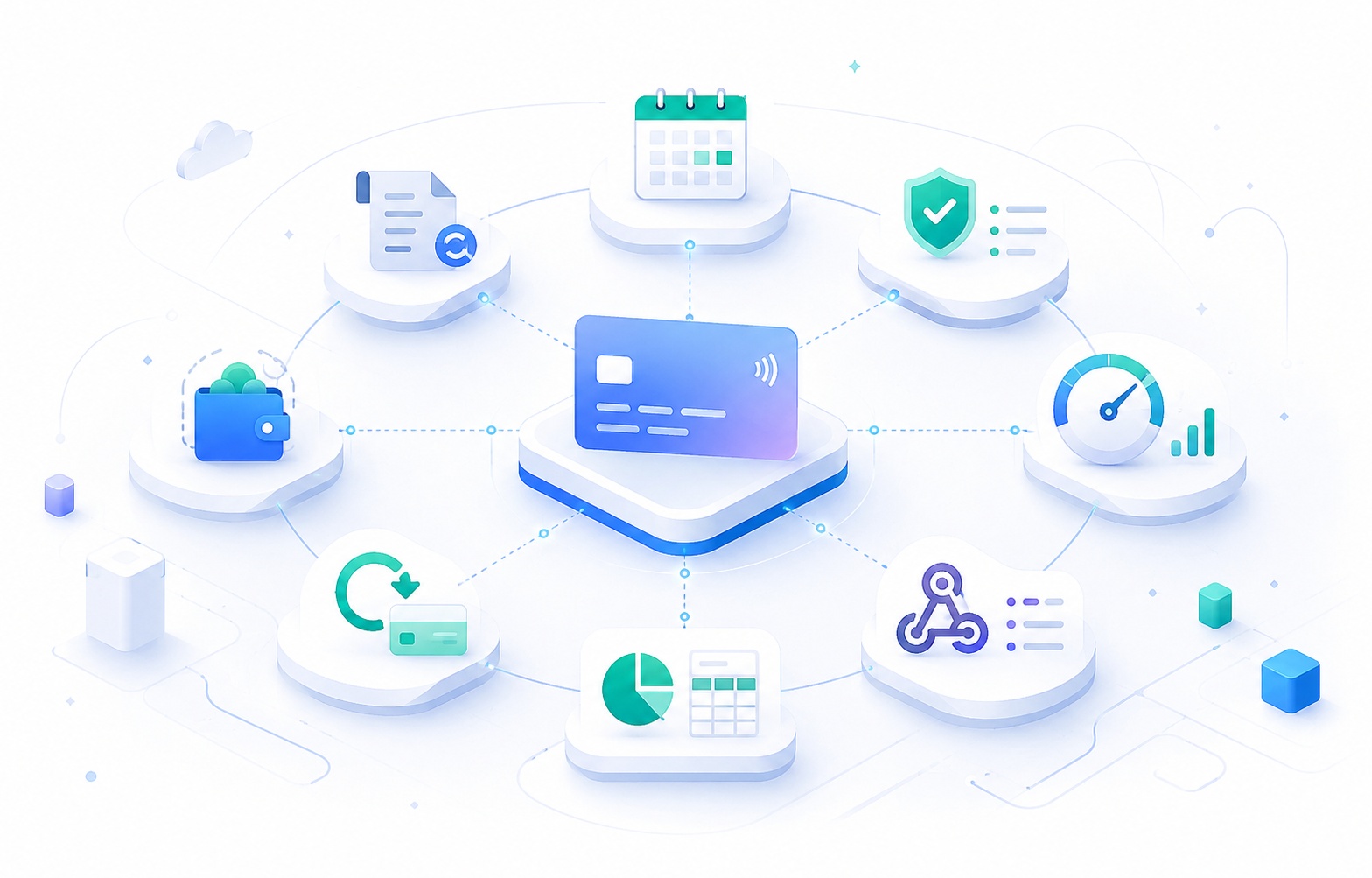
A completed checkout is a small, well-defined event: one customer, one payment method, one amount, one moment in time. A billing system is something much larger. It is the accumulated set of decisions a software company makes about pricing, access, time, money movement, exceptions, and recovery, and it lives partly in a payment provider and partly in the product itself. Stripe solves an enormous amount of infrastructure for that system, including subscription mechanics, invoicing, retries, tax calculation, metering, and entitlement signals. What it cannot do is decide what those things should mean inside a specific product. This article takes a single successful subscription apart and follows the state that appears afterward.
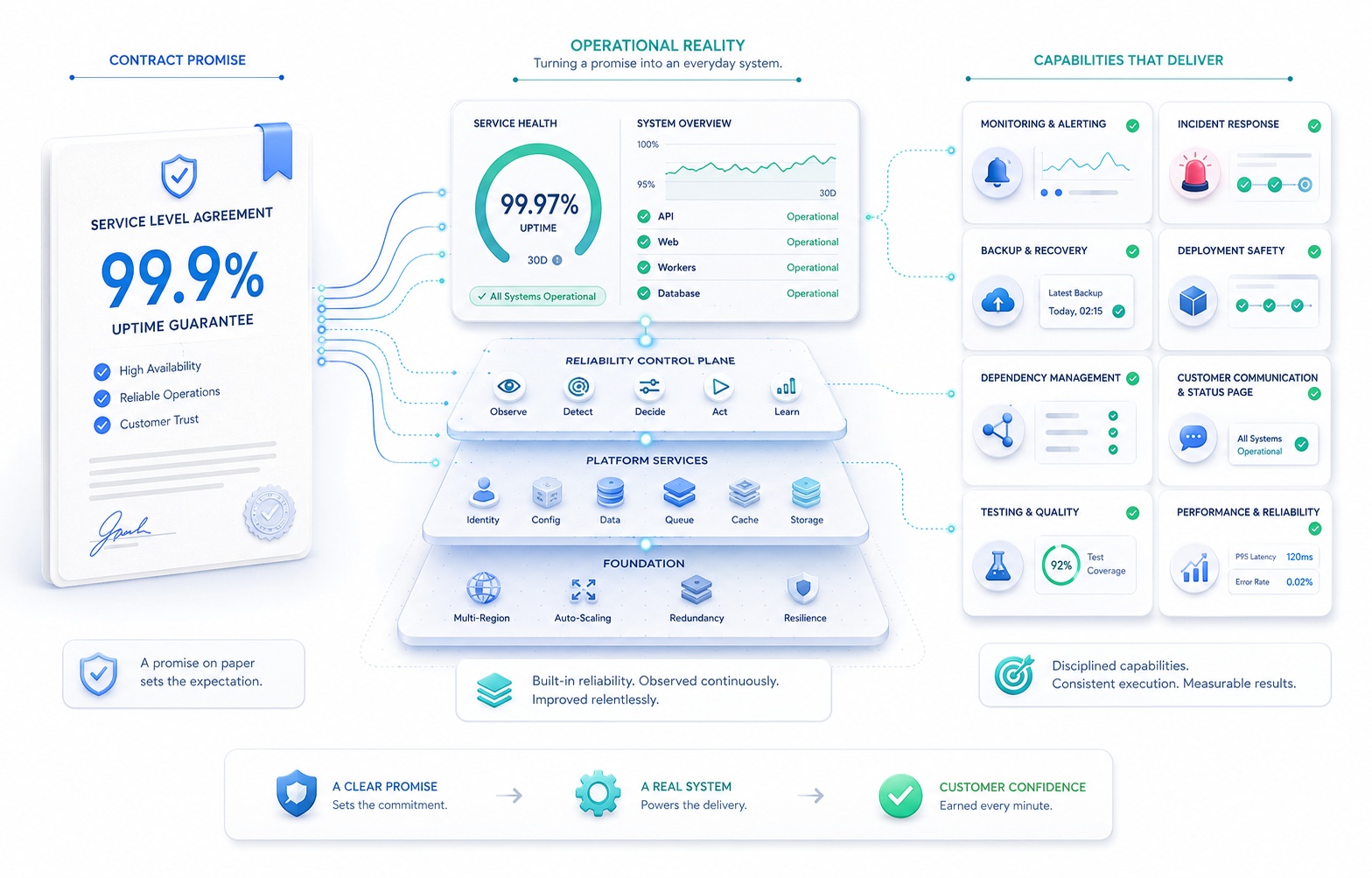
99.9% uptime looks like a small line in an enterprise contract. Behind it sits an entire operating model.
Monitoring, deployment safety, third-party dependencies, incident response, recovery, staffing, testing, and even customer communication can determine whether that promise is realistic.
This article explains what founders are actually committing to when they sign an SLA — and how to tell whether engineering can support the reliability Sales is offering.
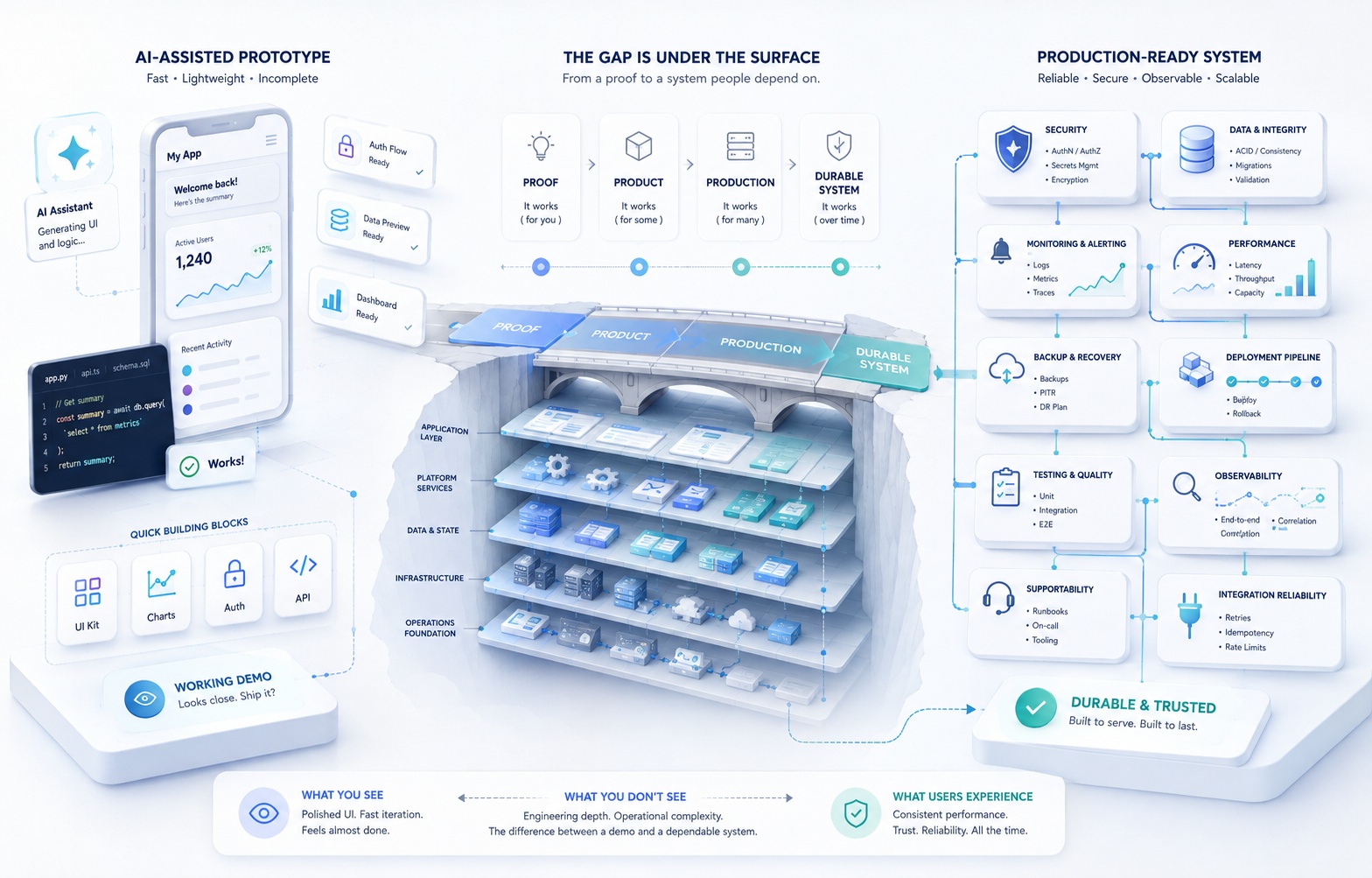
AI can turn an idea into a working prototype in days. That doesn't mean the production system is almost finished.
The difference lives in everything a demo can temporarily ignore: real data, permissions, failures, monitoring, migrations, security, recovery, performance, support, and safe releases.
This article examines the growing gap between proving that software can work and engineering it so a business can safely depend on it.
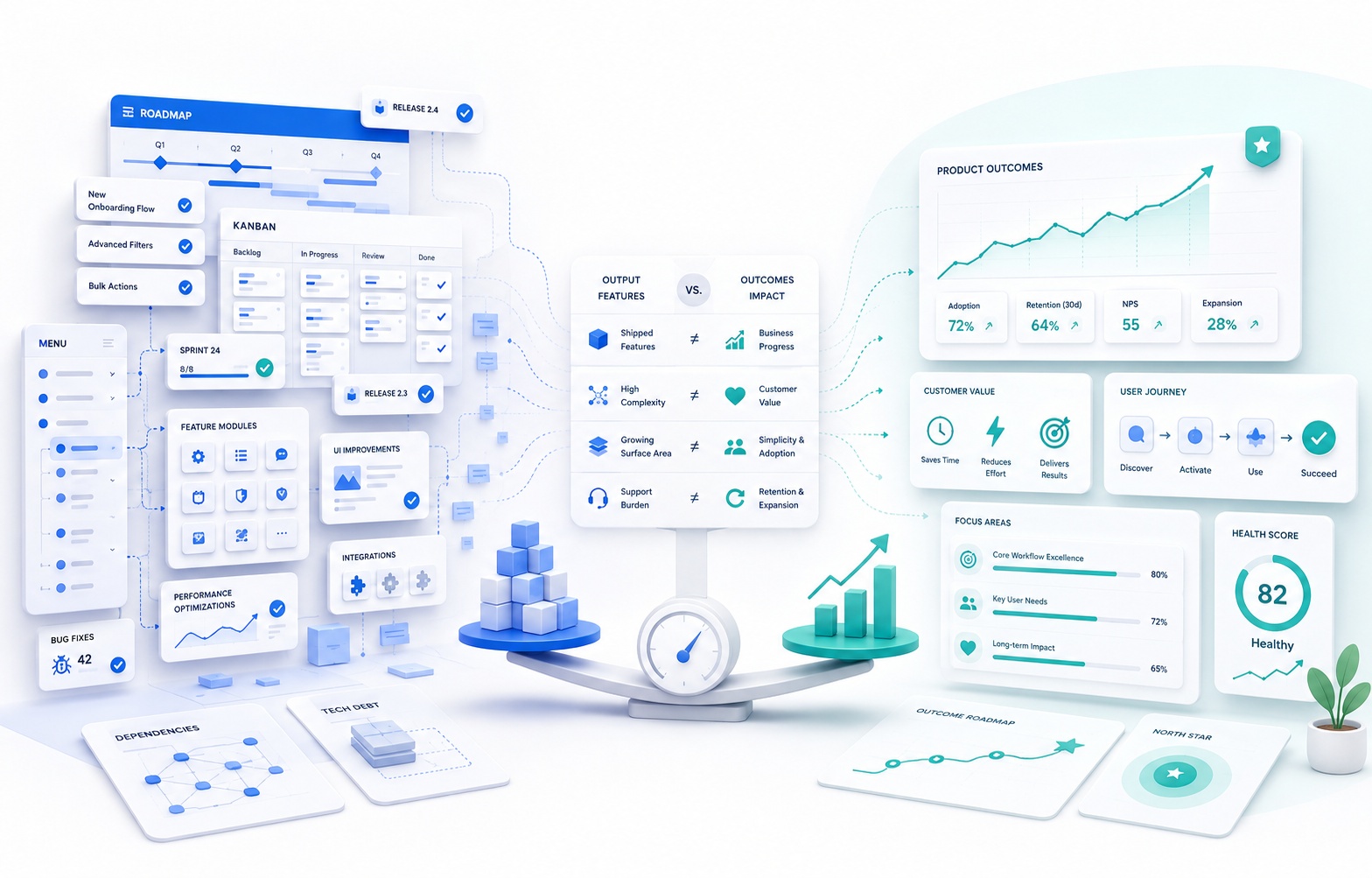
Your roadmap can be on schedule while your product goes nowhere.
Features ship, tickets close, and releases keep coming — yet adoption, retention, customer experience, or revenue barely move. The problem may not be execution. It may be what the organization has chosen to execute.
This article explores the gap between feature output and product outcomes, the hidden cost of product complexity, and how founders and CTOs can treat engineering capacity as an investment rather than an endless feature queue.
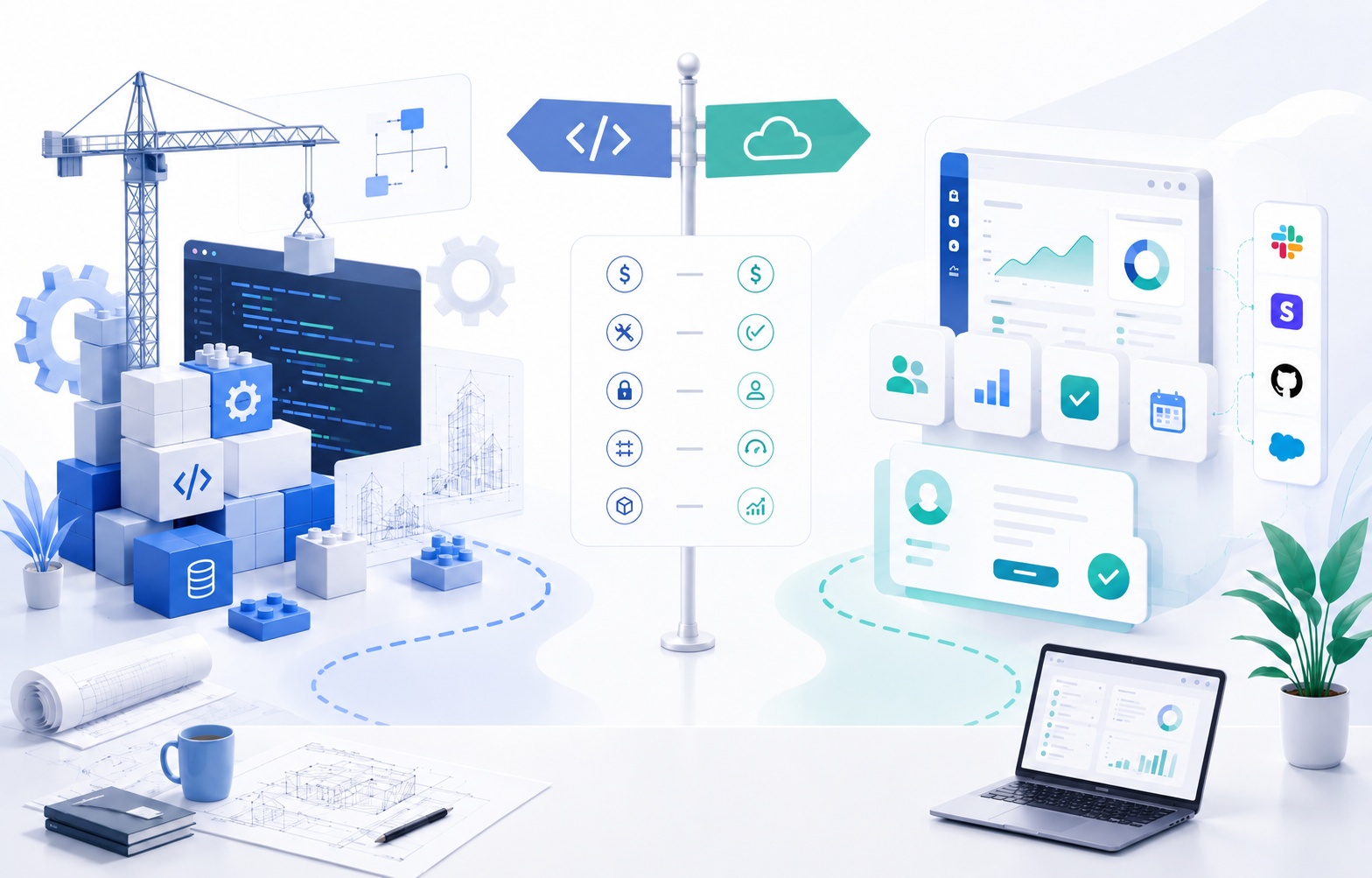
Buying software looks expensive because the invoice is visible. Building it internally often looks cheaper because the real bill arrives over years.
Development is only the beginning. Maintenance, QA, security, infrastructure, upgrades, support, key-person dependency and the product work you postpone all belong in the calculation.
This article explores how founders and CTOs can decide which capabilities deserve to become proprietary technology — and which should never become another permanent engineering responsibility.

Why are senior engineers still spending hours on release checklists, test data, environment setup, support escalations, and repetitive operational work?
The problem may not be engineering capacity at all. It may be years of small manual processes that quietly became part of the job. This article explores how to identify automation debt, calculate the real cost of engineering friction, and decide what should be automated, simplified, eliminated, or deliberately left to humans.
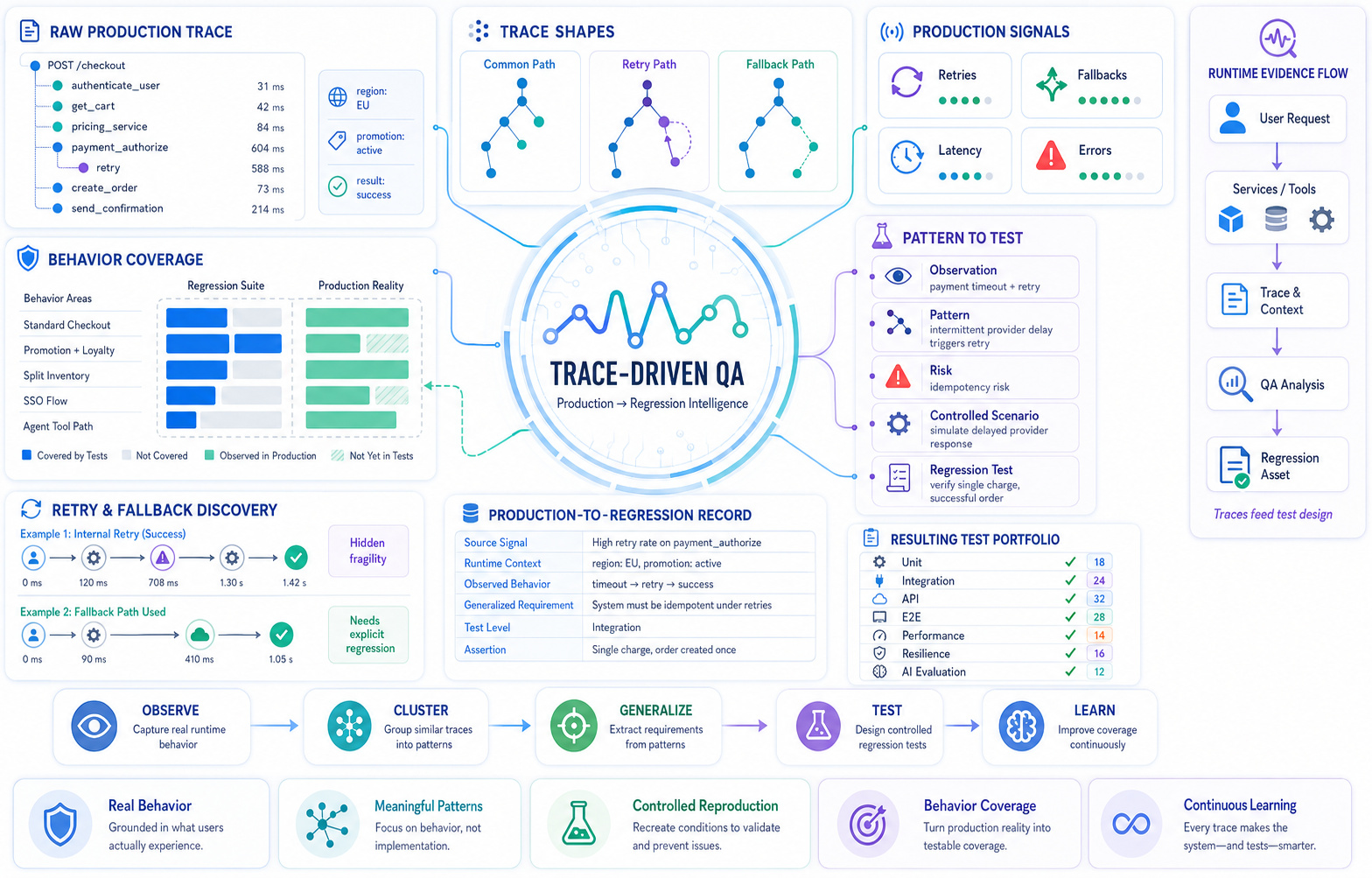
A reverse test-design exercise: starting from raw runtime evidence and working backward into regression strategy. On trace shape, behavior coverage, retries that hide fragility, OpenTelemetry semantic conventions, and why a production trace is evidence rather than an oracle.
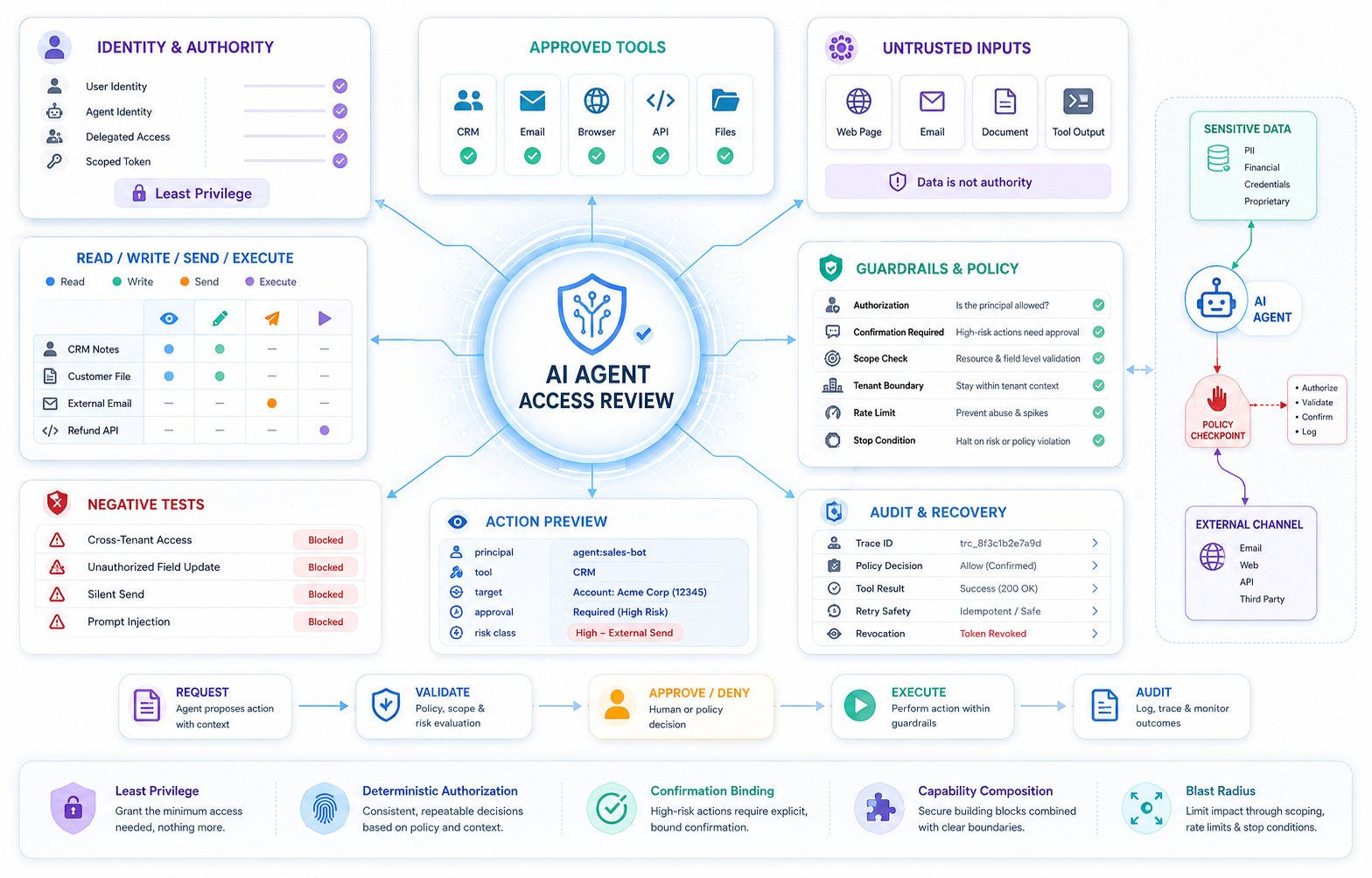
A privileged-access review for systems that decide, probabilistically, what to read, write, send, and delete
An access request lands on an engineering team's desk. A new service wants to connect to the CRM, read and send corporate email, browse customer-facing web portals, and call three internal APIs. Nobody would approve that request without asking who is behind it, what it is actually for, and what happens if it goes wrong. Then someone mentions that the "service" is a language model interpreting natural-language goals and choosing its own tool calls at runtime, and the conversation changes shape entirely. This article is about what changes, and how testing has to change with it.
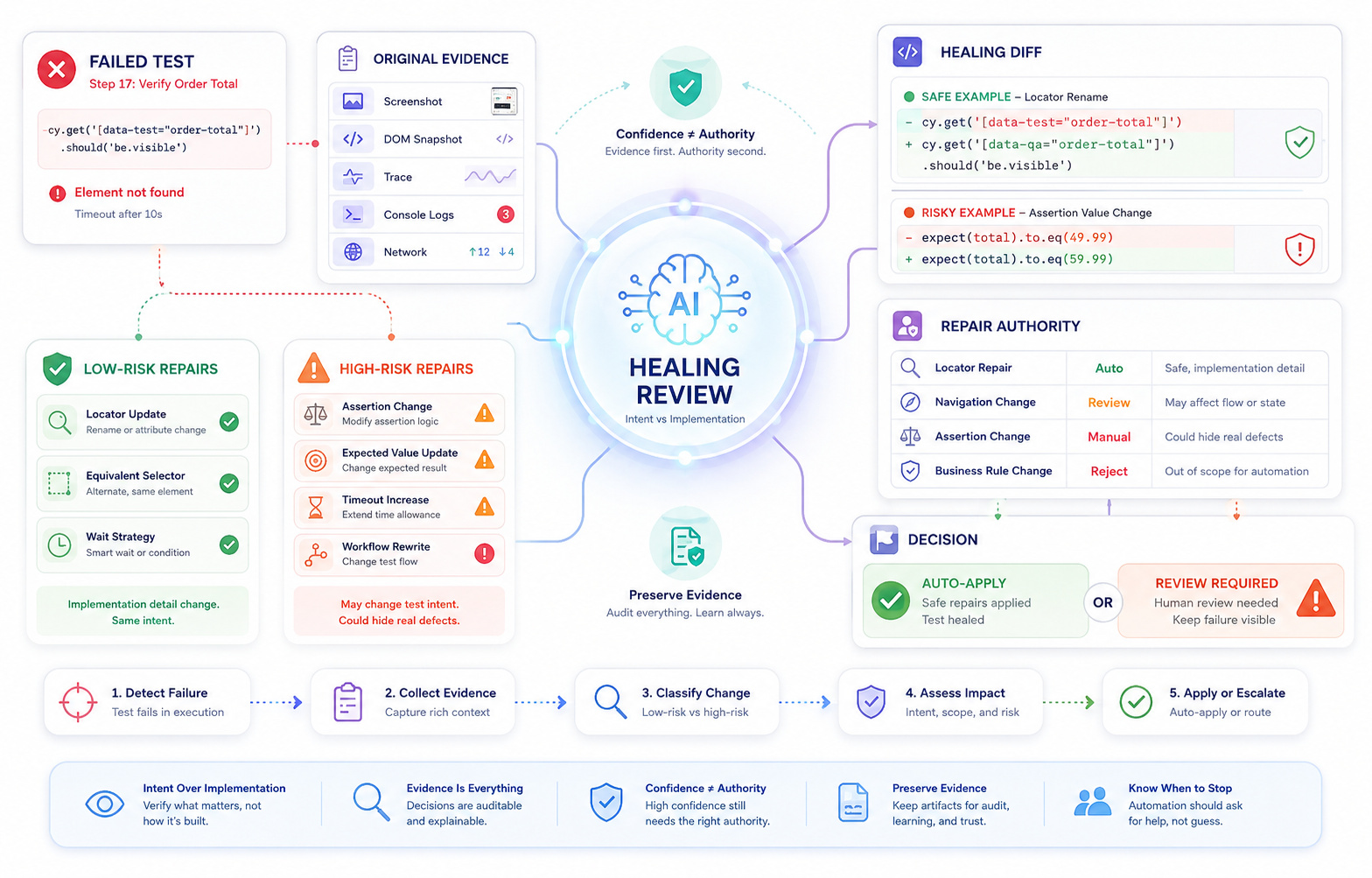
Self-healing test automation can remove enormous amounts of maintenance, but every automatic repair raises a harder question: did the system fix the test, or did it change the test until broken product behavior looked correct? This article examines where autonomous repair should stop — from locator and timing fixes to navigation changes, test data, accessibility semantics and assertions. It also explores healing diffs, repair authority, confidence thresholds, audit trails, Playwright Test Agents and ways to preserve defect-detection power while still reducing routine automation maintenance.
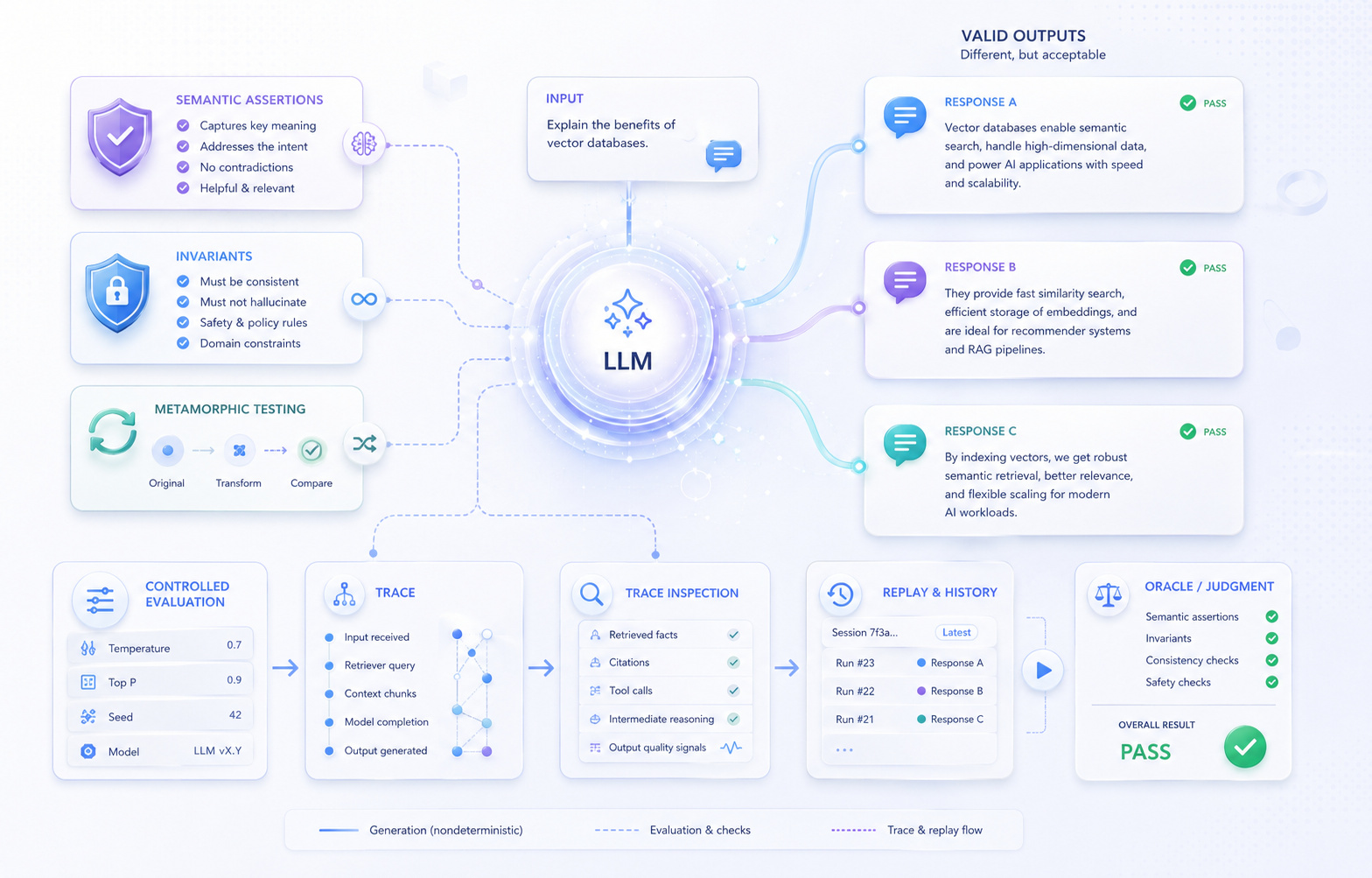
A test that expects one exact answer works well until the system can legitimately produce twenty. That does not make automated testing impossible — it changes what correctness has to mean. This article explores how engineers can test nondeterministic AI systems using invariants, semantic assertions, metamorphic tests, trace inspection, controlled dependencies, mocking, record-and-replay, repeated execution, and production-derived regression cases. The goal is not to force every run to look identical, but to define precisely which variations are acceptable and which ones indicate a real defect.
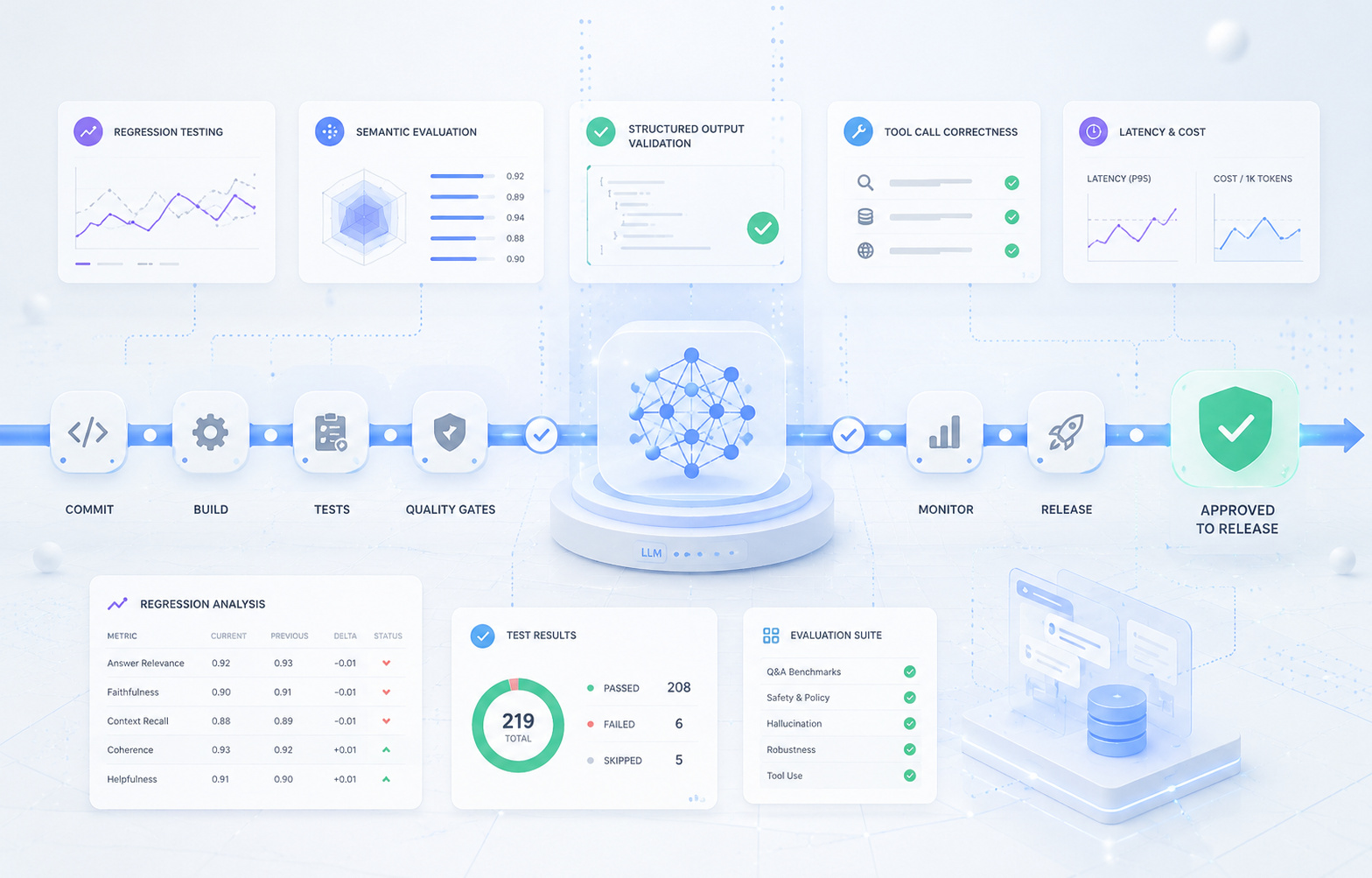
A green CI pipeline can prove that an AI feature deployed correctly without proving that its behavior deserves to reach production. This article explains how engineering teams can turn LLM evaluation into enforceable CI/CD quality gates — covering regression datasets, deterministic checks, semantic evaluation, LLM-as-a-judge calibration, tool-call correctness, structured outputs, latency, cost, and release thresholds. The goal is not to make probabilistic systems perfectly deterministic. It is to build enough measurable evidence to decide whether a specific AI change should ship.

Software companies have historically scaled by adding people. AI is beginning to weaken that relationship.
A small group of experienced engineers, product leaders, and founders can increasingly combine AI, automation, cloud platforms, and external specialists to control capabilities that once required much larger permanent organizations.
But shrinking the org chart does not eliminate responsibility. It concentrates it.
This article examines the rise of the high-leverage software company: why generalists and senior judgment may become more valuable, how QA and specialist expertise move toward on-demand models, where tiny teams become dangerously fragile, and why the future of organizational design may be less about headcount and more about capability density.