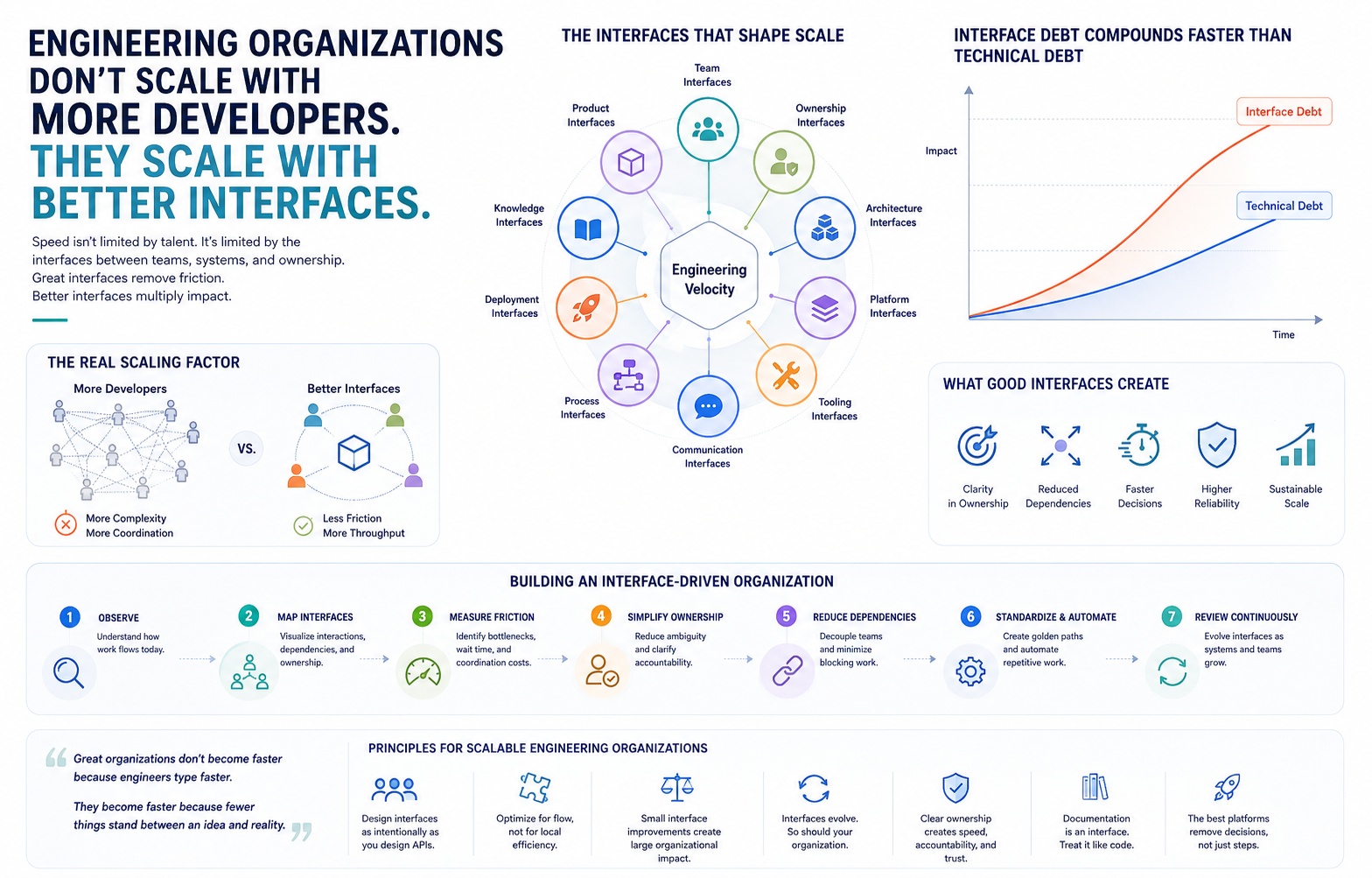
Hiring more engineers often increases complexity instead of delivery speed. The real scaling factor is the quality of interfaces between teams, platforms, ownership, and architecture. Here's why engineering organizations grow faster when they optimize collaboration instead of headcount.
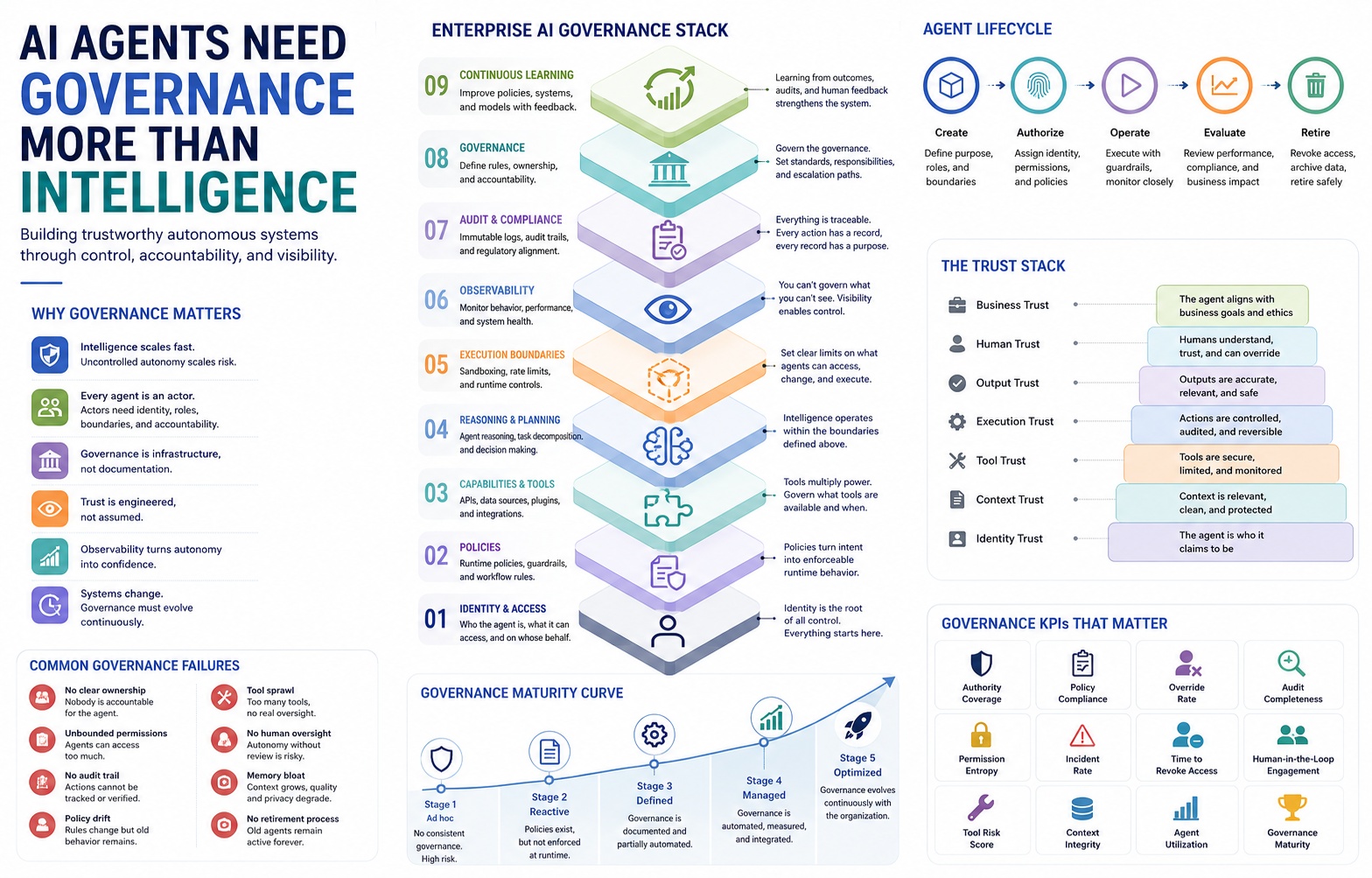
As AI agents become more autonomous, the greatest engineering challenge is no longer improving model capability—it's ensuring that every autonomous decision remains accountable, observable, and governed. This article explores why runtime policies, identity management, approval workflows, execution boundaries, auditability, and human oversight are becoming the foundation of enterprise AI. Learn how engineering organizations can design governance systems that scale alongside intelligent agents instead of reacting after failures occur.
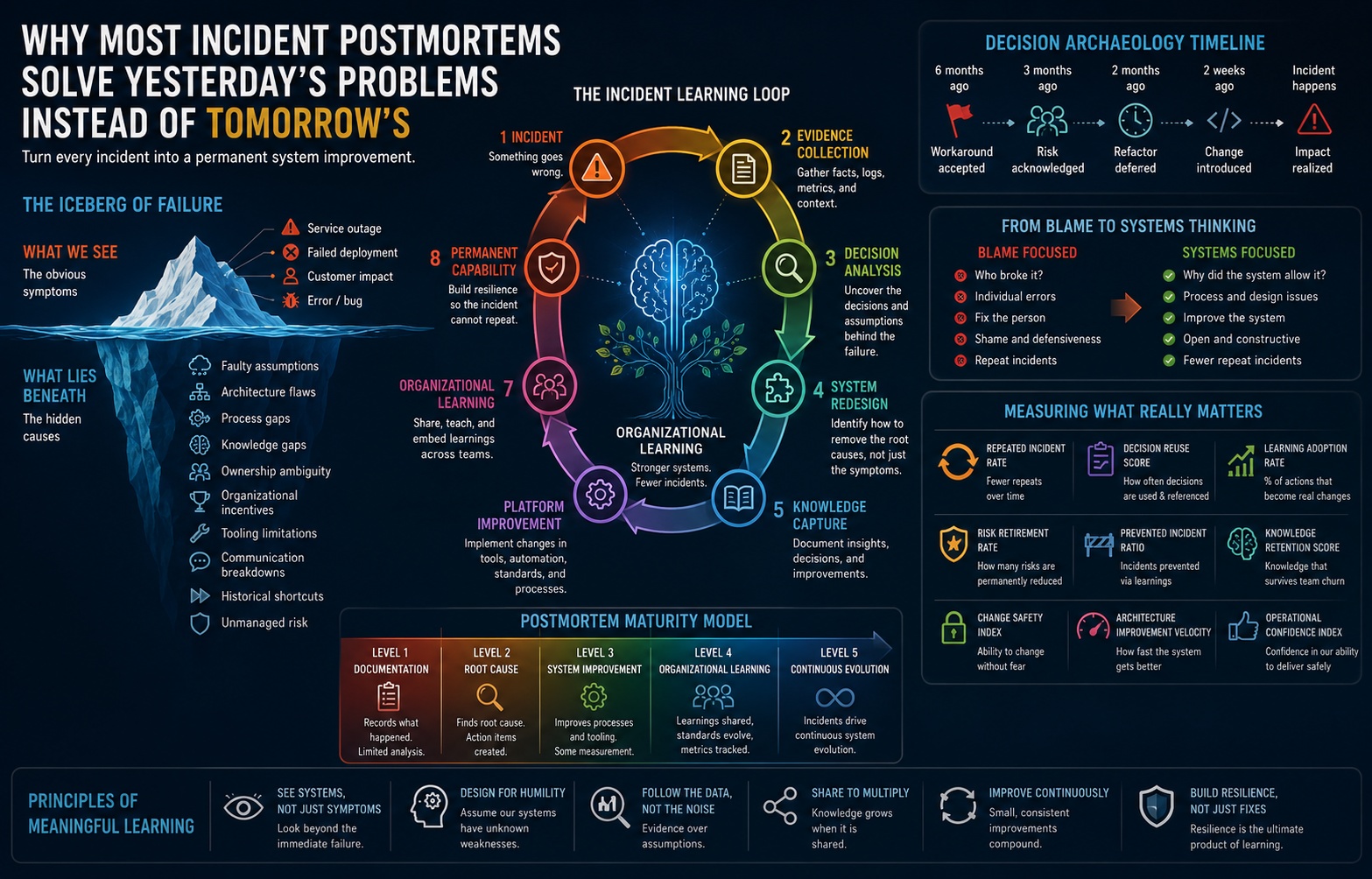
Every engineering incident leaves behind more than logs and timelines—it leaves behind decisions, assumptions, and systemic patterns that either evolve or quietly repeat. This article explores why traditional postmortems often stop at explaining failures instead of redesigning the engineering systems that enabled them. Learn how decision archaeology, organizational memory, platform improvements, and learning-focused governance can transform incidents into lasting engineering capabilities rather than temporary fixes.
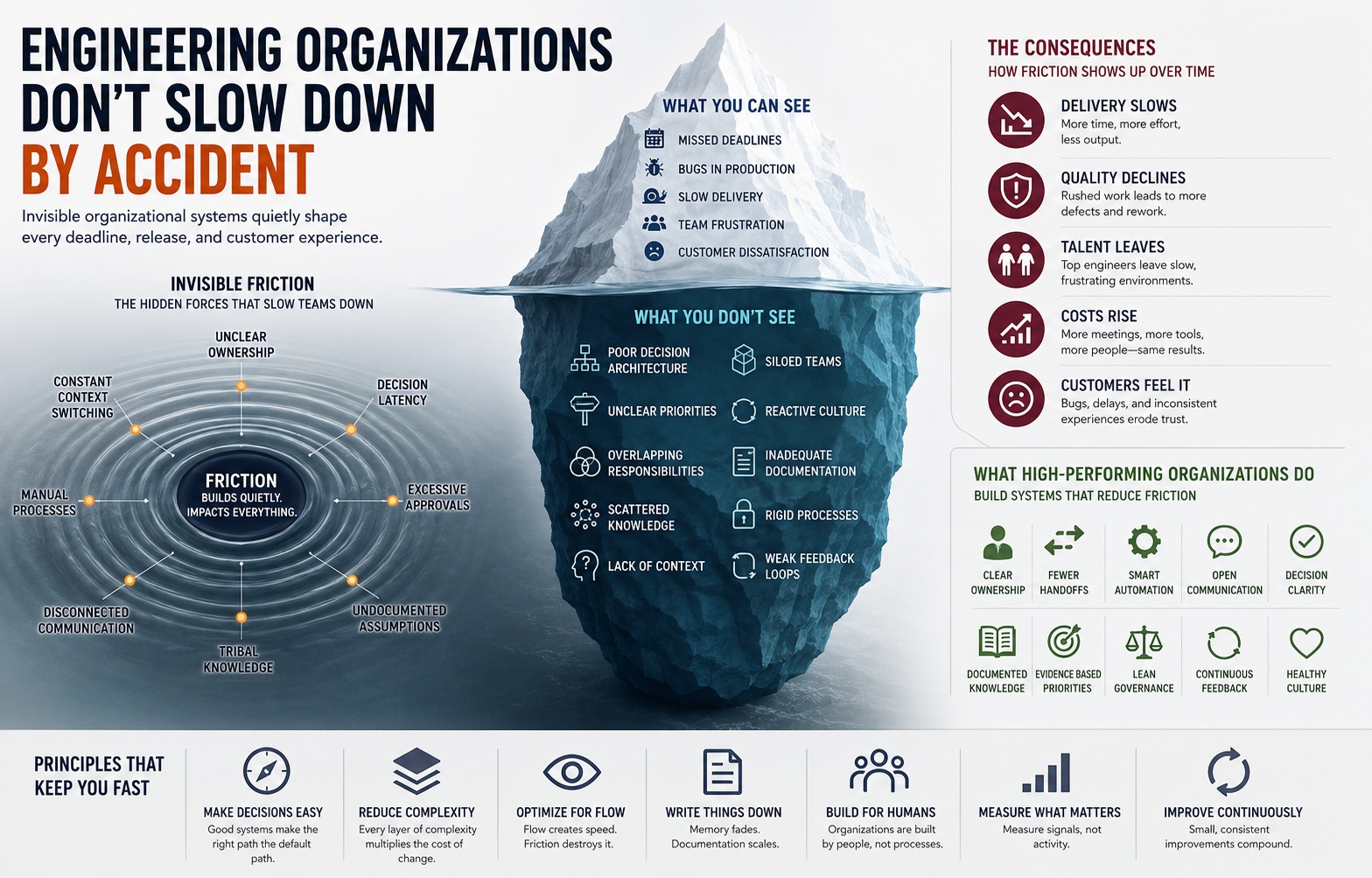
Every engineering organization eventually slows down—but rarely because developers become less capable. More often, invisible organizational systems gradually increase the cost of every decision, review, handoff, and release. This article explores how ownership, communication, governance, and decision architecture quietly shape engineering performance long before problems appear in production. Learn how organizational friction compounds over time, why traditional engineering metrics often hide the real issues, and how high-performing organizations design systems that scale with complexity instead of fighting against it.
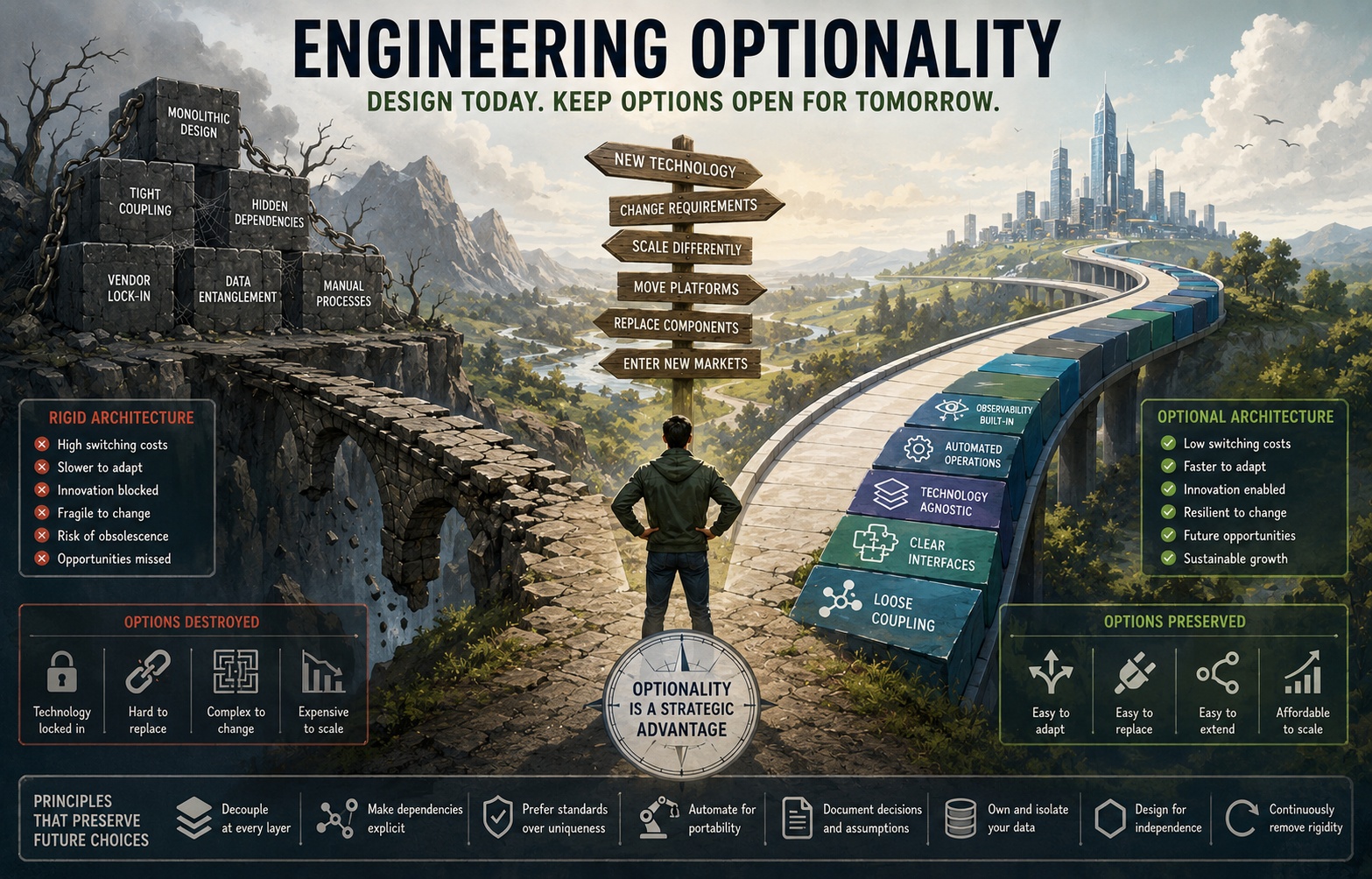
Many engineering teams optimize for today's delivery. The strongest organizations optimize for tomorrow's adaptability. This article explores why preserving future choices is one of the most valuable—and overlooked—architectural capabilities in modern software engineering.
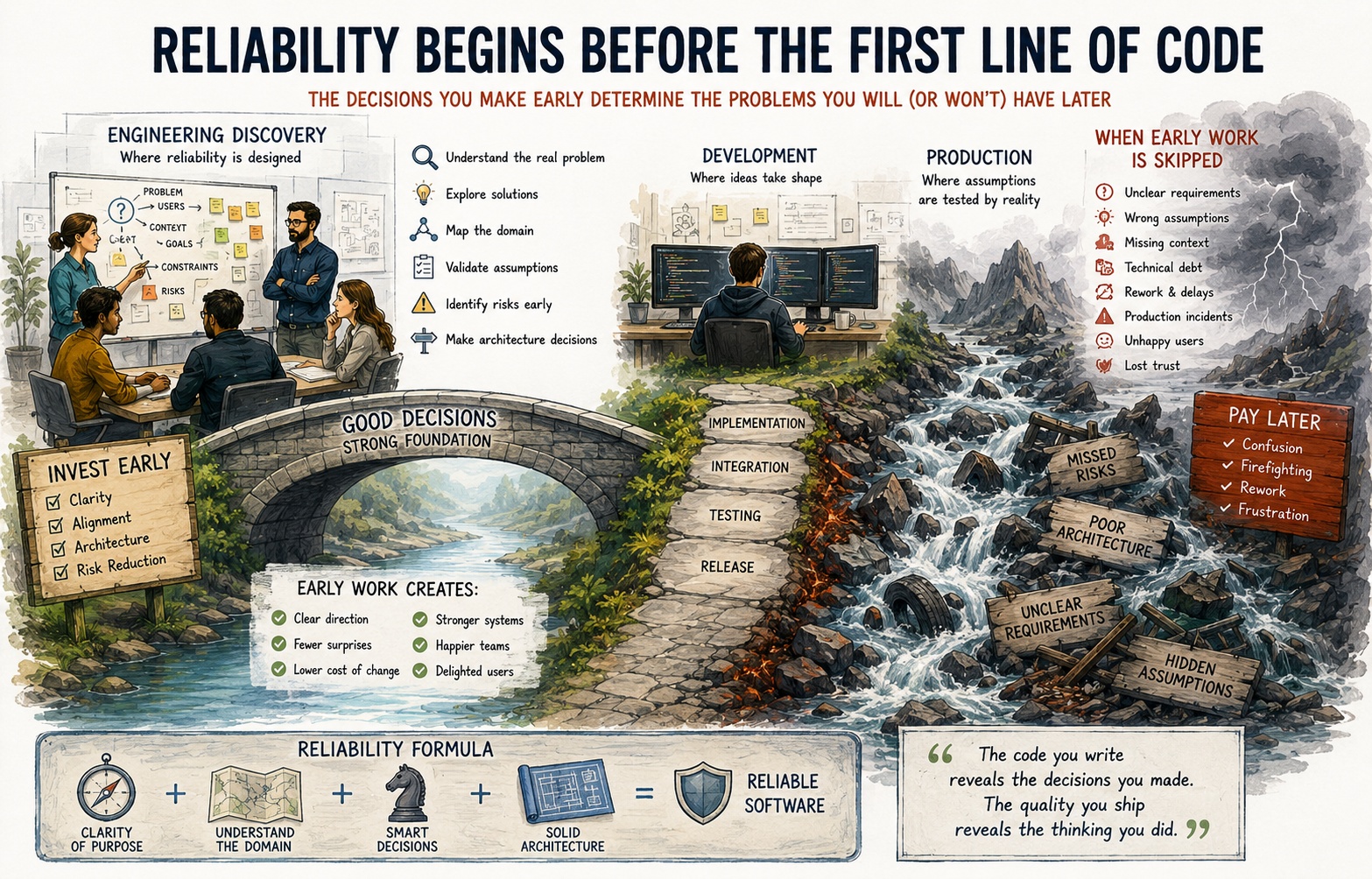
Most software failures don't begin in production—or even during development. They begin much earlier, when teams misunderstand the problem, overlook assumptions, or skip critical discovery work. This article explores why engineering excellence starts long before the first commit and how better thinking creates more reliable software.
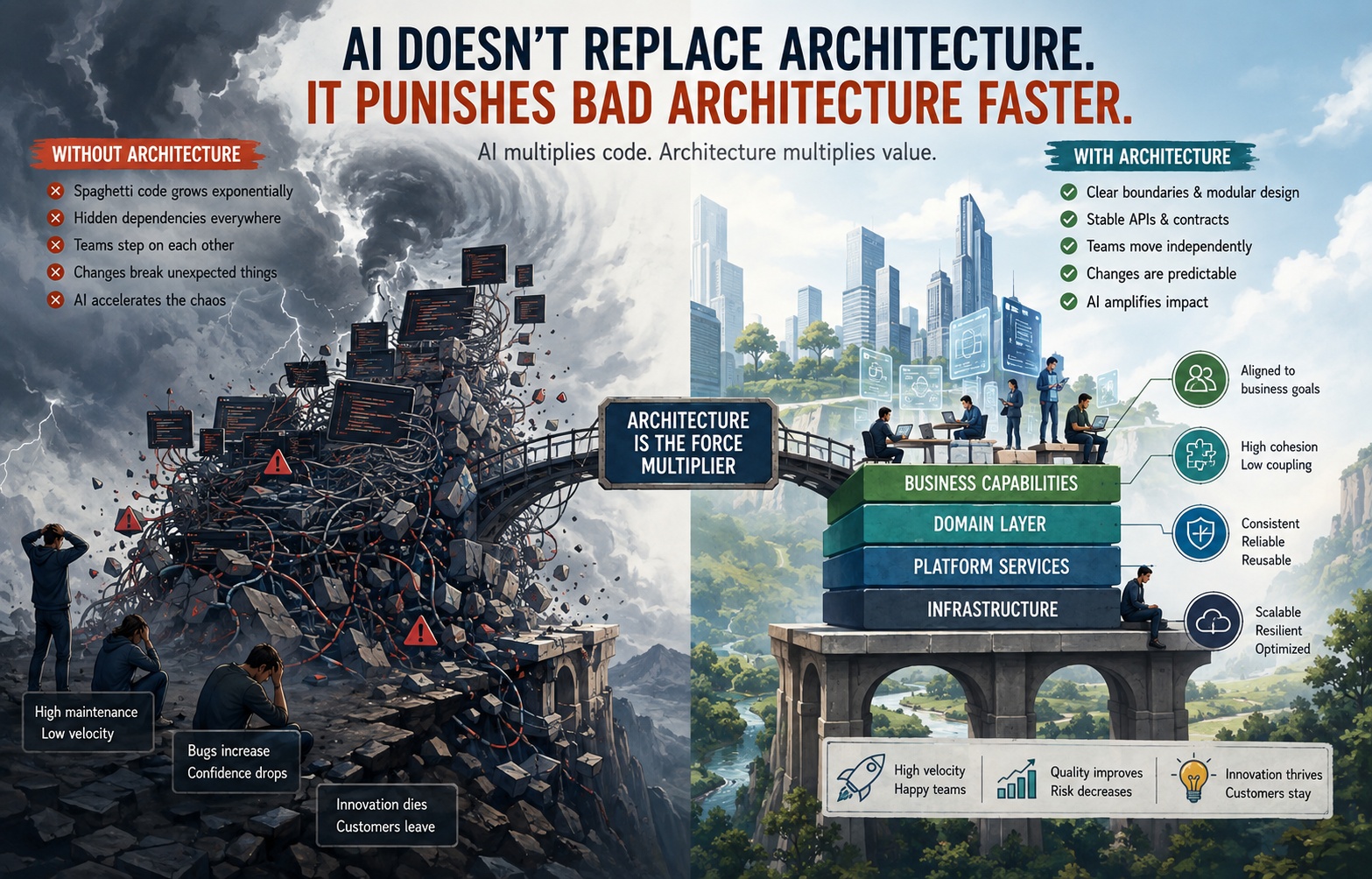
AI can generate code at unprecedented speed, but it cannot replace thoughtful software architecture. As development accelerates, architectural decisions become the true foundation of scalability, maintainability, and long-term business value. This article explores why organizations that invest in modular systems, stable APIs, and platform engineering will outperform those relying solely on AI-assisted coding.
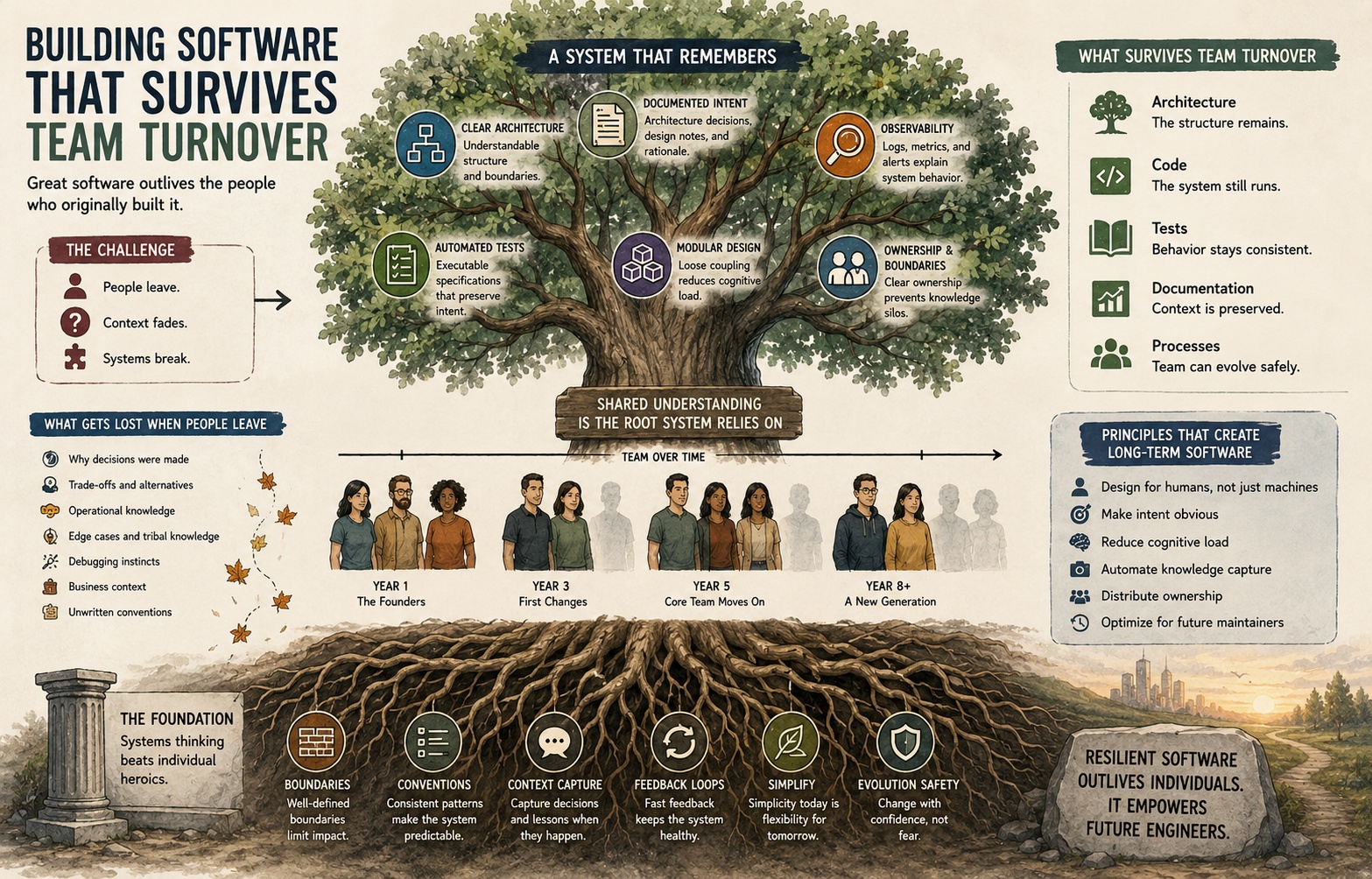
Every engineering team experiences turnover, but only a few build software that becomes stronger—not weaker—when people leave. This article explores why long-term maintainability depends on architectural memory, distributed knowledge, clear ownership, and systems designed to outlive individual contributors.
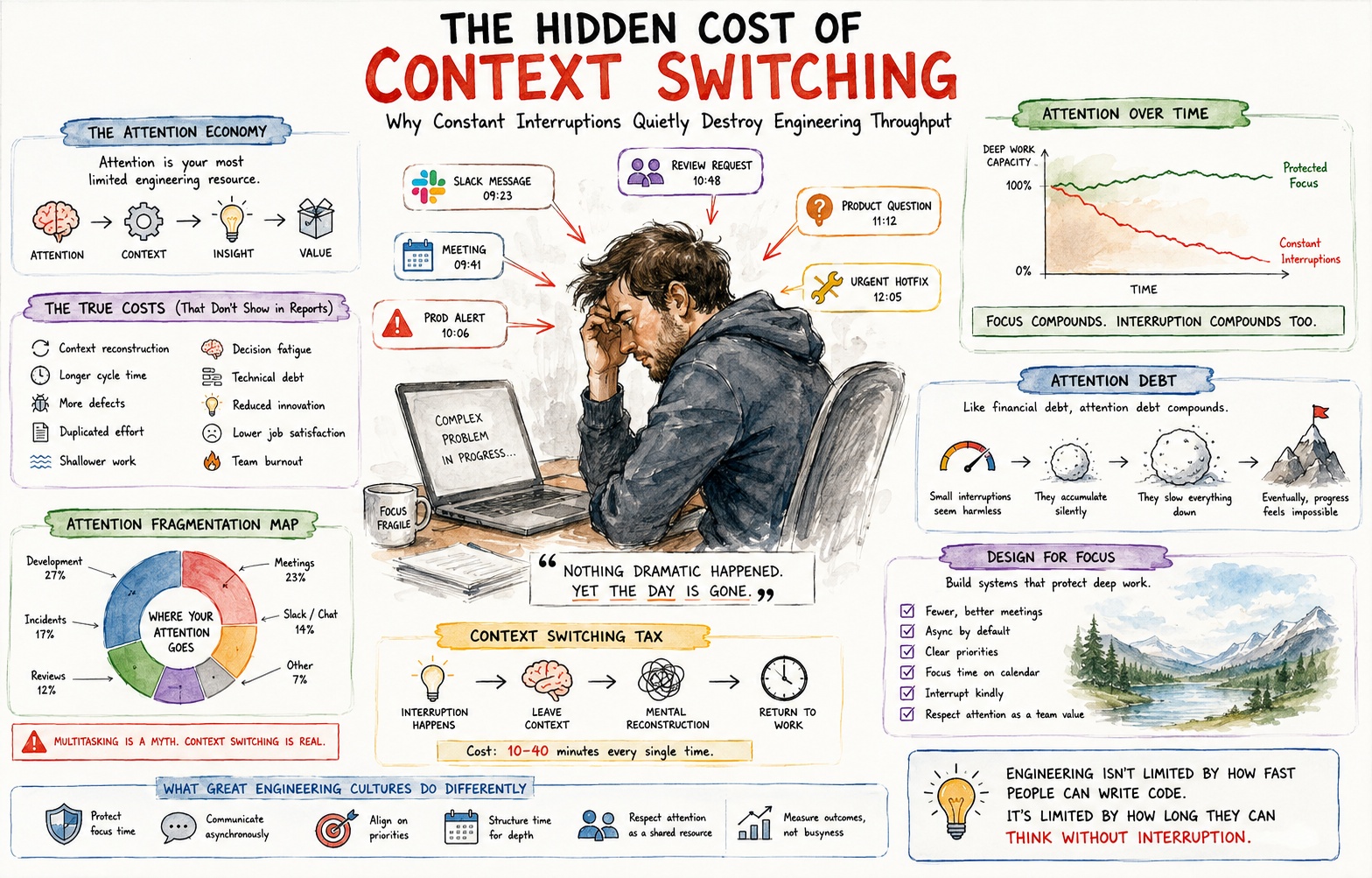
Engineering teams rarely fail because developers lack talent. They fail because constant interruptions quietly consume the attention required to solve complex problems. This article explores why context switching has become one of the most expensive invisible costs in modern software engineering—and how organizations can redesign their systems to protect deep work, accelerate delivery, and improve long-term engineering quality.
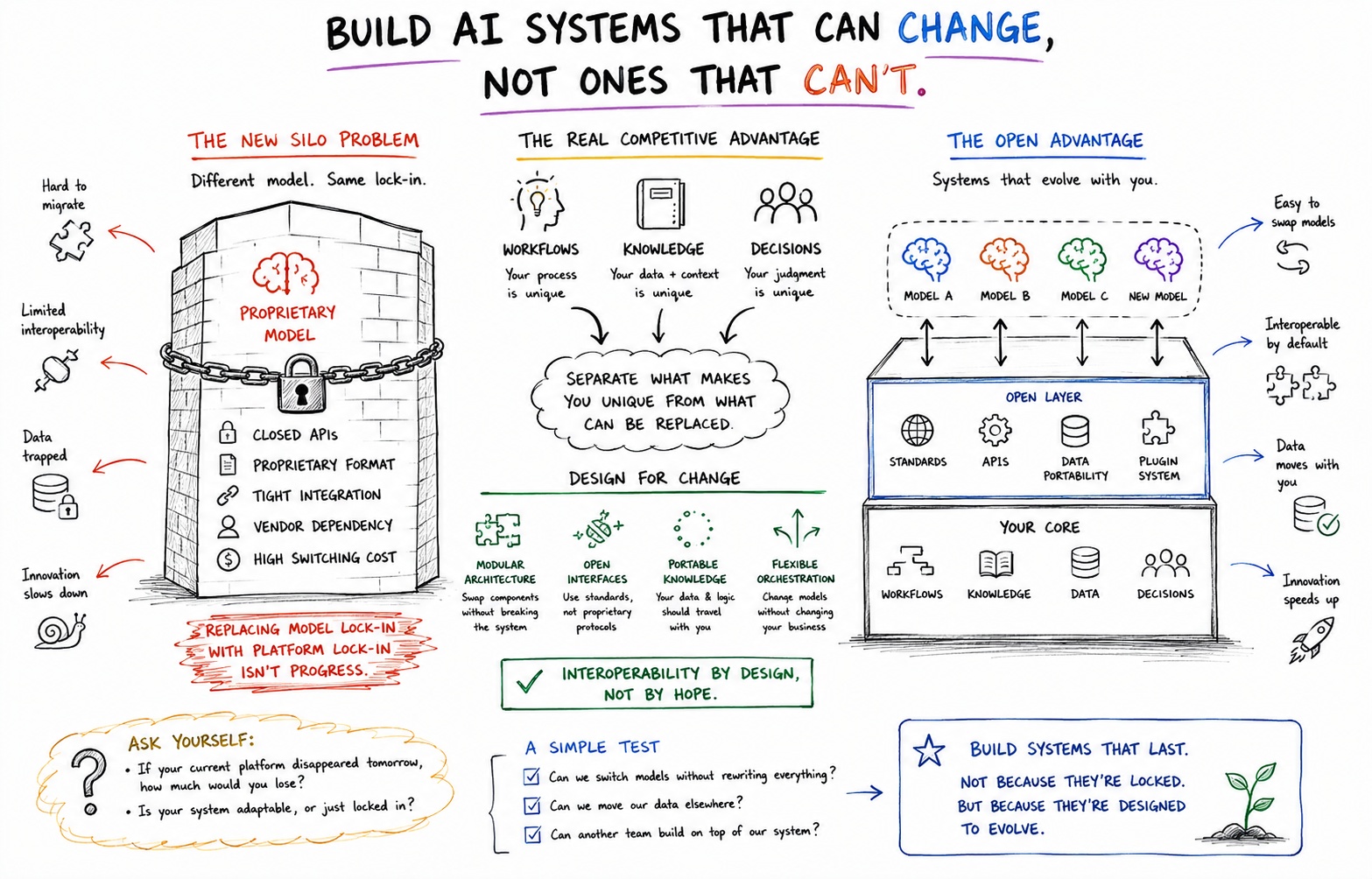
Every engineering organization creates valuable knowledge, but only a few preserve it in a way that makes future teams faster, smarter, and more resilient. This article explores why organizational memory has become one of the most overlooked competitive advantages in software engineering—and how elite teams transform every incident, architectural decision, and deployment into long-term engineering intelligence.
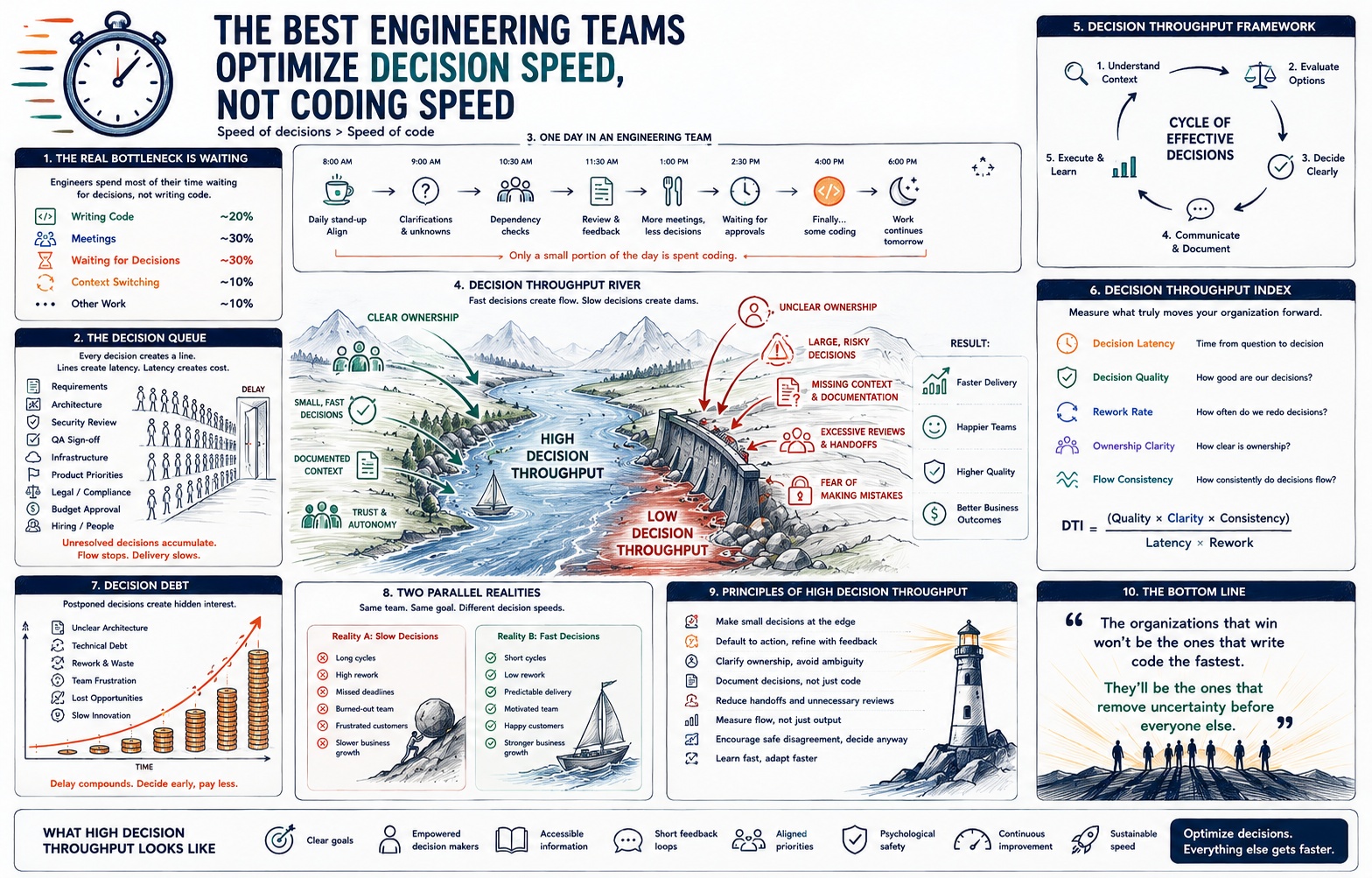
Exceptional engineering teams don't outperform competitors by writing code faster—they outperform them by eliminating organizational delays. This article introduces the concept of Decision Throughput and explores how faster, higher-quality decisions reduce engineering friction, improve delivery, strengthen software quality, and accelerate long-term business growth.
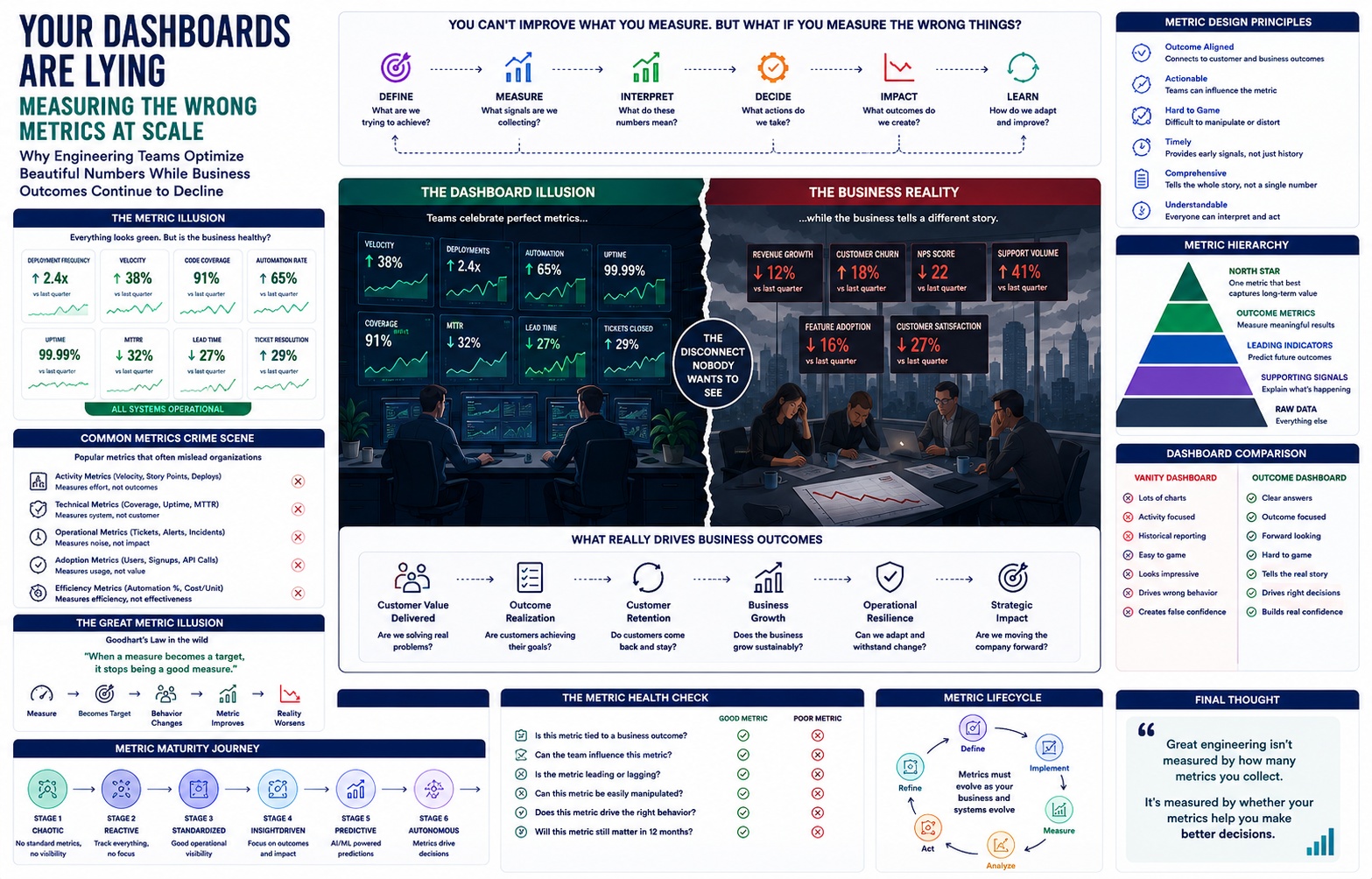
Modern engineering organizations collect thousands of metrics, yet many still struggle with slow delivery, customer churn, and poor strategic decisions. This article explores why dashboards often optimize the wrong behaviors, how vanity metrics quietly replace meaningful business signals, and what engineering leaders should measure instead to create sustainable, data-driven organizations.